




















Business confidence in Ghana remained firmly in positive territory in the second quarter of 2026. However, rising operating costs, limited access to credit and increasing competition from imported goods continued to weigh on businesses.
The latest Business Barometer released by the Association of Ghana Industries (AGI) recorded a Business Confidence Index of 108.7, down slightly from 109.5 in the first quarter.
Although the marginal decline signals some moderation in business sentiment, the index remains above the benchmark of 100, indicating that businesses generally remain optimistic about economic conditions.
The AGI attributed the continued optimism partly to improving macroeconomic stability and growing confidence in the government’s economic reform programme.
Businesses report mixed performance
The survey showed that 42% of businesses experienced improved performance during the quarter, while 47% reported no significant change.
Only 11% of respondents said their performance deteriorated.
Businesses were even more positive about their prospects for the rest of the year. About 72% expected their performance to improve, while 26% anticipated little or no change. Just 2% expected their situation to worsen.
Despite the positive outlook, however, businesses continue to face significant cost and operational challenges.
Electricity remains the biggest concern
The cost of electricity emerged as the leading concern among businesses, accounting for 19% of responses.
High raw material costs followed at 14%, while the multiplicity of taxes was cited by 12% of respondents. Access to credit accounted for 11%, with poor road infrastructure recording 9%.
Electricity costs were identified as a major concern across all three sectors covered by the survey — manufacturing, services and construction — and affected small, medium and large businesses.
The AGI said energy-related cost pressures remained persistent throughout the quarter, with businesses yet to see immediate relief.
Access to finance remains a challenge
The report also raised concerns about whether the growth in private-sector lending is translating into stronger economic activity.
Although lending to businesses has increased, the AGI said many companies continue to struggle to secure affordable and accessible credit.
The challenge was particularly significant in the construction sector, where access to finance ranked among the three most important constraints on business activity.
Import competition puts local manufacturers under pressure
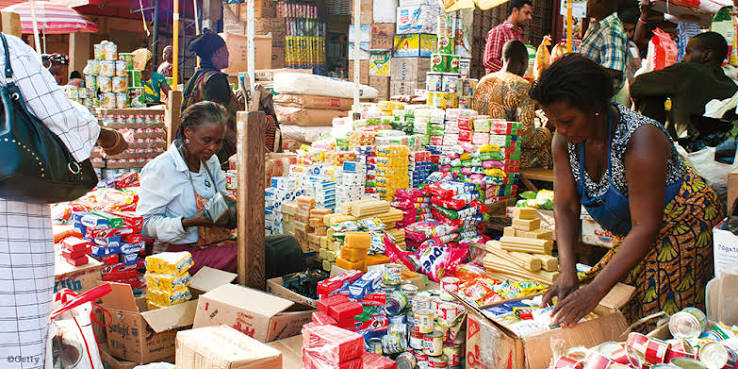
The AGI also sounded the alarm over the growing volume of imported goods entering the Ghanaian market.
According to the association, local manufacturers are losing market share because of what it described as an “unbridled influx of imports”, coupled with unfair trade practices.
The report identified smuggling, tax evasion and the misdescription of imported goods as some of the practices affecting domestic producers.
The AGI said some products are allegedly being classified as raw materials to benefit from a 5% concessionary import duty rather than the applicable 20% rate. It also raised concerns about traders who avoid taxes by bringing goods into the country through unapproved routes.
The association warned that such practices are contributing to declining capacity utilisation in several local industries.
Some industries operating well below capacity
The wheat flour industry provides one example of the pressure facing local manufacturers.
According to the AGI report, the industry has an installed annual production capacity of approximately 800,000 metric tonnes, but current production stands at about 320,000 metric tonnes.
This means the industry is operating at roughly 40% of its installed capacity.
Capacity utilisation has also declined considerably, falling from 57% in 2021 to 40% in 2024.
Other industries are facing similar challenges. The washing powder industry is operating at an estimated 30% of capacity, while vegetable cooking oil production is operating at approximately 76%.
The figures highlight concerns about the ability of domestic manufacturers to fully utilise their investments amid rising costs and increasing competition.
Inflation reverses downward trend
The AGI Business Barometer also pointed to a reversal in the recent disinflation trend.
Average inflation increased from 3.4% in the first quarter to 4.1% in the second quarter of 2026.
The association attributed part of the increase to external pressures, including the ongoing conflict in the Middle East.
Despite the rise in inflation and other business risks, the AGI maintained a broadly positive outlook for the second half of 2026.
The association expects continued macroeconomic stability to support business expansion but cautioned that high energy costs, difficulties accessing finance and competition from imported goods could undermine the growth of local industries.
SMEs dominate the survey
The Q2 2026 Business Barometer drew responses from businesses across Ghana.
Manufacturing and services each accounted for 47% of the respondents, while construction made up the remaining 6%.
Small and medium-sized enterprises dominated the survey, accounting for approximately 90% of respondents. Large businesses and African Giants represented the remaining 10%.
The findings suggest that while Ghana’s private sector remains cautiously optimistic about the economic outlook, sustained efforts to reduce production costs, improve access to finance and protect local producers from unfair trade practices will be critical to maintaining business confidence.