












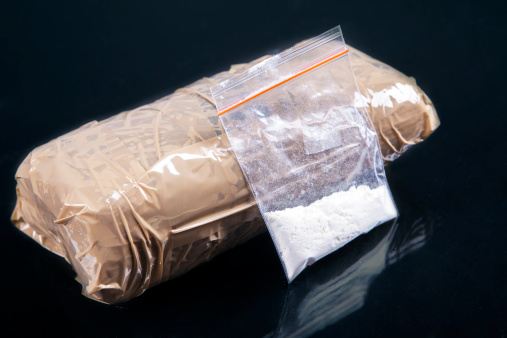
Ghana was the fifth-largest country of origin for cocaine seized at Belgium’s Port of Antwerp in 2025, according to data from Belgian Customs.
The country was the only African nation among the top five, with the other countries being Ecuador, Costa Rica, Brazil and Colombia, all of which are linked to cocaine production or transit routes in Latin America.
Belgian authorities confiscated almost 55 tonnes of cocaine at Antwerp in 2025, representing a 24 per cent increase from the 44 tonnes seized in 2024. Belgium’s Finance Minister, Jan Jambon, disclosed the figures on January 21, 2026.
The figures, reported by Belgian public broadcaster VRT, place Ghana as an outlier on the list. Antwerp is considered a major gateway for cocaine entering Europe, with Belgian Customs identifying Belgium as a key destination for cocaine transported by sea.
However, the term “country of origin” in the customs data refers to the country where the container was loaded and shipped, rather than where the cocaine was produced. The cocaine itself is believed to originate from South America and is concealed in legitimate exports from Ghana.
Ghana’s position on the list follows several major cocaine interceptions involving cargo shipped from the Port of Tema.
In November 2025, Belgian authorities seized 2,829 kilogrammes of cocaine hidden in a consignment of cassava flour from Tema. A month later, another 1,158 kilogrammes of suspected cocaine was discovered in a shipment from Ghana.
The two seizures amounted to nearly four tonnes, representing about seven per cent of the total cocaine seized at Antwerp during the year.
Ghana’s appearance among the top sources is a new development. A 2022 assessment of Europe’s cocaine market by the European Union’s drugs agency and Europol identified Côte d’Ivoire, Senegal, Benin, Sierra Leone and The Gambia among West African countries associated with major cocaine seizures, but Ghana was not included.
The development is part of a wider pattern involving drug seizures abroad linked to shipments from Ghanaian ports.
In June 2025, Dutch Customs intercepted 4,500 kilogrammes of cocaine concealed in a timber shipment from Tema at the Port of Amsterdam. The seizure was described as the largest in the port’s history.
In June 2026, Australian authorities reported the seizure of 320 kilogrammes of methamphetamine hidden in charcoal shipped from Ghana. The drugs were valued at A$296 million.
Two months later, in September 2026, French Customs at Dunkirk seized almost 3.9 tonnes of cocaine concealed in a container carrying plastic waste from Ghana, with part of the consignment reportedly destined for Antwerp. French authorities estimated the value of the seizure at €225 million, equivalent to about US$261 million.
The largest cocaine seizure recorded locally was 3.3 tonnes intercepted at Pedu Junction in Cape Coast in March 2025. Authorities valued the consignment at more than US$350 million.
The Dunkirk seizure led President John Mahama to convene a meeting with the country’s security chiefs on September 17. He directed an inter-agency task force to assess Ghana’s systems for detecting narcotics and develop a roadmap to prevent drugs from being moved through the country’s ports and border.
The alleged mastermind, Dutch fugitive Jos Leijdekkers, popularly known as “Bolle Jos,” remains at large. Prosecutors have said irregularities were detected in scans of the containers before they were exported, but the consignments were not subjected to further physical examination.
Meanwhile, Interior Minister Muntaka Mubarak said in August that intelligence-led operations had resulted in 217 arrests and 165 prosecutions over a 20-month period.
During the same period, authorities seized more than 8,500 kilogrammes of narcotics and 45.4 million tramadol tablets.
The issue was also brought before Parliament on Tuesday after the Minority requested the House’s recall from recess.
The Minority subsequently proposed a bipartisan ad hoc committee to investigate the seizures. The motion, filed by First Deputy Minority Whip Habib Iddrisu, sought to examine how the consignments were processed and cleared, the companies involved, the progress of investigations and prosecutions, port security and the roles played by state agencies.
However, Speaker of Parliament Alban Bagbin ruled the motion inadmissible under Standing Orders 5, 6 and 103(f).
He explained that four substantive narcotics cases involving about 21 people were already before the courts and that the proposed parliamentary inquiry could overlap with matters being determined through the judicial process.
The Minority disagreed with the ruling, arguing that its proposed investigation was focused on systems and institutional controls rather than determining the guilt or innocence of accused persons.
Minority Leader Alexander Afenyo-Markin said the proposed committee would have examined issues including container scanning, customs procedures, port access, intelligence sharing and coordination among state agencies.
He argued that Parliament was not being asked to determine criminal responsibility and criticised the Speaker’s interpretation of the scope of the proposed inquiry.
Concerns over Ghana’s handling of narcotics trafficking have also been raised by security officials.
At a meeting on September 17, Interior Minister Muntaka Mubarak said some international partners were becoming reluctant to share intelligence with Ghana because of concerns about possible insiders within security institutions.
He specifically mentioned France and Australia as countries that had expressed such concerns.
The Narcotics Control Commission (NACOC) has also warned that Ghana’s role in the drug trade is changing.
Its Director-General, Maxwell Obuba Mantey, said in May that Ghana was no longer simply being used as a transit point and was experiencing increasing local drug consumption. In July, he said the country was increasingly becoming a distribution hub.
According to him, drug-related arrests increased by 197 per cent in 2025.
NACOC officials have also cautioned that trafficking networks sometimes use fishermen to collect narcotics from vessels at sea and transport the drugs ashore.
Following the arrest of suspects connected to the Dunkirk shipment, NACOC said Ghana would not be allowed to become a safe haven, transit route or operational base for international drug trafficking organisations.