




















Ghana’s long-term water security could be under serious threat if the pollution of rivers and other water bodies, particularly through galamsey, is not urgently addressed, a research scientist at the CSIR-Water Research Institute (CSIR-WRI) has warned.
Dr Franklin Obiri-Nyarko, a Research Scientist at the institute’s Groundwater Division, cautioned that Ghana could eventually be forced to import water if the degradation of its water resources continues unchecked.
“If care is not taken, in the near future, we are going to import water into our country. And that is very serious,” he said in an interview.
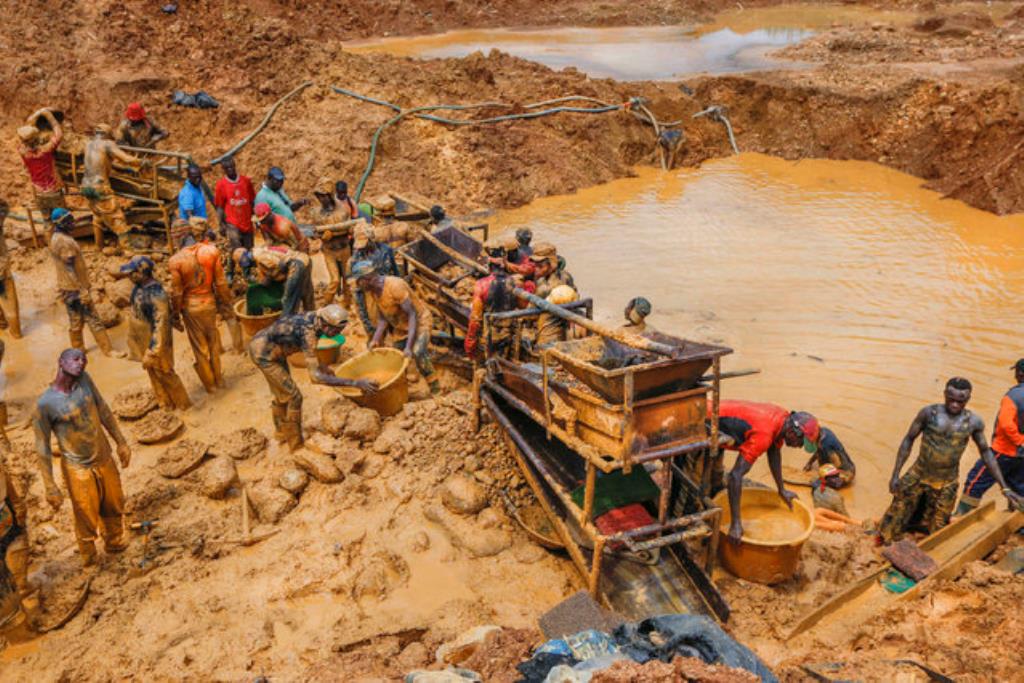
His warning comes amid growing concerns over the impact of illegal mining, popularly known as galamsey, on the quality and availability of water resources across the country.
60% of individual water bodies showing contamination
According to Dr Obiri-Nyarko, about 60% of Ghana’s individual water bodies are showing signs of contamination.
He, however, stressed that the figure should not be interpreted as meaning that 60% of Ghana’s total water volume has been polluted.
Rather, the statistic refers to the proportion of individual water bodies that have recorded signs of contamination.
The distinction, he explained, is important in accurately understanding the scale of the problem and its implications for the country’s water security.
Major river systems increasingly affected
Dr Obiri-Nyarko explained that Ghana’s water resources are organised around three major river systems: the Volta, Southwestern and Coastal basins.
The Volta Basin accounts for approximately 70% of the country’s river systems, while the Southwestern and Coastal basins account for about 22% and 8%, respectively.
The Southwestern Basin includes major rivers such as the Bia, Tano, Ankobra and Pra.
While the Volta Basin was initially considered relatively less affected by the pollution recorded in some other parts of the country, Dr Obiri-Nyarko said contamination is now being observed within the basin as well.
This, he warned, highlights the expanding nature of the threat to Ghana’s freshwater resources.
Galamsey remains a major concern
Illegal mining has emerged as one of the major threats to Ghana’s rivers and other water bodies, with mining activities contributing to the degradation and contamination of freshwater sources.
The pollution of these water bodies has implications not only for the environment but also for communities and institutions that depend on rivers and other sources for drinking water, agriculture and other economic activities.
Dr Obiri-Nyarko warned that continued degradation could make it increasingly difficult and expensive to secure adequate supplies of safe water in the future.
Water security requires urgent action
The researcher stressed that protecting Ghana’s water resources must be treated as a national priority.
He warned that allowing pollution to continue could have serious long-term consequences for the country’s ability to provide safe and sustainable water supplies to its population.
The warning therefore underscores the need for stronger measures to protect rivers and other water sources from activities that threaten their quality.
Dr Obiri-Nyarko’s comments also highlight the importance of distinguishing between the number of contaminated water bodies and the overall volume of polluted water when assessing Ghana’s water situation.
While the 60% figure does not mean that 60% of Ghana’s total water resources are polluted, the scientist’s warning points to a broader concern: the continued contamination of individual water bodies could gradually undermine the country’s capacity to meet its future water needs.
For Ghana, he said, protecting the country’s rivers and other water resources is no longer simply an environmental issue but a critical matter of national water security.