












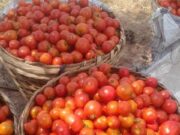













The harvest season is expected to bring further relief to consumers as food prices are projected to decline in the coming months.
According to Government Statistician Dr. Alhassan Iddrisu, inflation is projected to remain stable despite concerns over rising food costs and supply chain challenges. He noted that Ghana is entering its main harvest season, a period that has historically contributed to lower food prices across the country.
“It is very clear, and I want to be very direct with regard to what the data is suggesting. We are headed into the main harvest season, and historically in Ghana, that brings prices down, particularly for food crops,” he said.
According to Dr. Iddrisu, the increase in the supply of farm produce during the harvest period typically leads to lower market prices as farmers bring large quantities of crops to consumers.
“When farmers bring their produce to the market in bulk, supply goes up and prices come down,” he explained.
He pointed to recent Consumer Price Index (CPI) data to support his argument, highlighting the Savannah Region, where inflation stood at negative 3.0 percent in May 2026. Dr. Iddrisu attributed the decline to strong local agricultural production and increased food supply within the region.
“The local harvest supply is actually the reason why we are seeing prices go down. As the main harvest reaches markets across more parts of the country, we expect this downward pressure on food prices to broaden,” he stated.
The government statistician further explained that food and non-alcoholic beverages account for about 43 percent of Ghana’s inflation basket, making food prices a major determinant of the country’s overall inflation rate.
“Food and non-alcoholic beverages make up close to half of everything a typical household consumes. When food prices fall, the overall CPI number reflects it directly,” he said.
Dr. Iddrisu added that if agricultural production remains strong throughout the harvest season, the resulting decline in food prices could significantly contribute to reducing inflation nationwide.


