























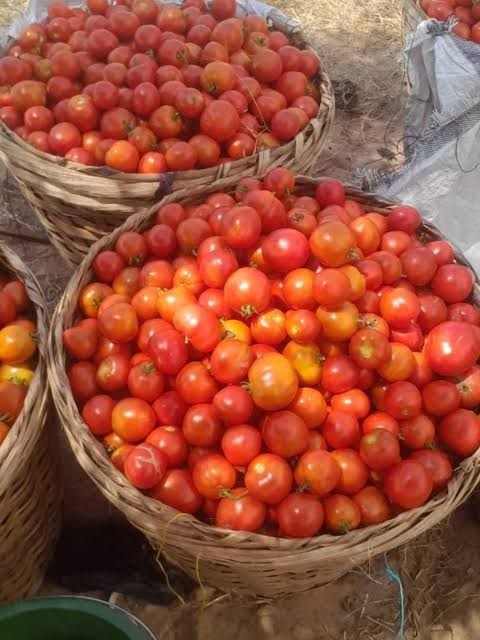
Consumers could see some relief from soaring tomato prices in the coming weeks as increased supplies from local farmers begin reaching markets across Ghana.
Deputy Minister for Food and Agriculture, John Dumelo, says the ongoing harvest is expected to significantly improve domestic tomato supplies and ease the pressure that has pushed prices sharply higher in recent months.
Mr Dumelo announced the expected price reduction in a Facebook post on Monday, September 7, explaining that farmers have already started harvesting their crops.
“The prices of tomatoes should see a sharp decline in the coming weeks as Ghanaian farmers have started harvesting,” he said.
The anticipated increase in supply comes after tomatoes recorded the largest price increase among food items monitored in August 2026.
Government plans dry-season tomato production
Beyond the immediate harvest, the government is preparing a large-scale dry-season tomato farming programme expected to run from December 2026 to June 2027.
Mr Dumelo said the initiative is intended to increase production during periods when supply traditionally falls and prices tend to rise.
He explained that land preparation has already taken place in parts of northern Ghana, while seedling nursing and transplanting are expected to begin in October.
The government has also provided farmers with solar-powered boreholes and irrigation inputs to support cultivation during the dry season.
According to the Deputy Minister, the programme is designed to help “augment the shortfalls” expected next year and improve the availability of tomatoes throughout the year.
Irrigation seen as key to reducing seasonal shortages
The planned dry-season programme is part of efforts to reduce Ghana’s dependence on rainfall for tomato production and address recurring seasonal supply gaps.
By providing irrigation infrastructure and other inputs, the government hopes farmers will be able to maintain production during periods of inadequate rainfall.
The strategy could help moderate the sharp price fluctuations that often occur when local tomato supplies decline.
However, traders remain cautious about the outlook, warning that continued low rainfall could affect overall production and supply.
While the current harvest is expected to bring some relief to consumers, sustained production throughout the dry season will be critical if the government is to achieve more stable tomato supplies and prices into 2027.