






















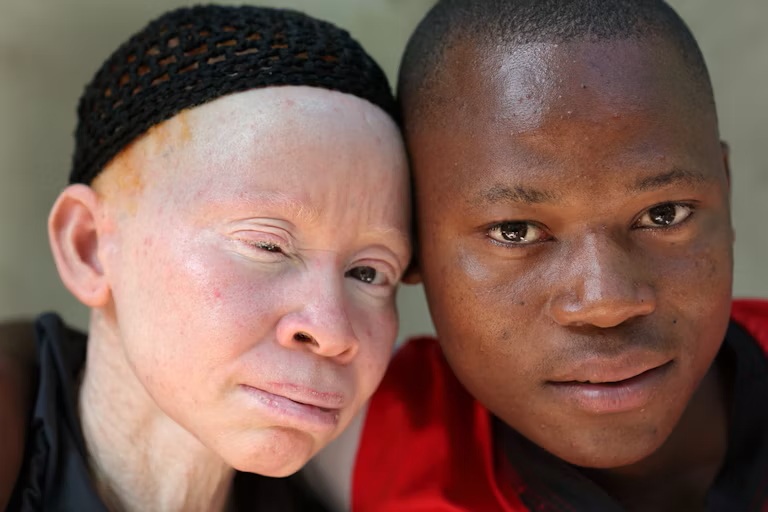
As the world marks International Albinism Awareness Day (IAAD) today, June 13, health experts and advocacy groups are using the occasion to educate the public about albinism, a rare genetic condition that affects pigmentation and vision, while calling for greater inclusion and protection for people living with the condition.
International Albinism Awareness Day was established by the United Nations to raise awareness about the rights, challenges, and achievements of people with albinism across the globe. The annual observance also seeks to combat discrimination, myths, and misconceptions that continue to affect many individuals living with the condition.
About albinism
Albinism is a genetic condition caused by mutations in certain genes responsible for the production of melanin, the pigment that gives color to the skin, hair, and eyes. People with albinism typically have very light skin, hair, and eye colour, although their appearance can vary depending on the type of albinism they have.
Medical experts stress that albinism is not a disease and is not contagious. It cannot be spread from one person to another through contact. Rather, it is an inherited condition passed down through family genes.
In addition to differences in pigmentation, most people with albinism experience vision challenges ranging from mild to severe. They are also more vulnerable to skin damage caused by prolonged exposure to the sun due to the reduced amount of melanin in their skin.
Types of Albinism
There are two main forms of albinism. The most common is Oculocutaneous Albinism (OCA), which affects the skin, hair, and eyes. Individuals with OCA often have lighter pigmentation and varying degrees of visual impairment.
The second form, Ocular Albinism (OA), primarily affects the eyes and has little or no impact on skin and hair colour. People with OA may experience blurred vision, sensitivity to light, and other vision-related difficulties.
Researchers estimate that oculocutaneous albinism affects about one in every 20,000 people worldwide, while ocular albinism affects at least one in every 60,000 males.
Scientists have identified several genes linked to albinism, including TYR, OCA2, TYRP1, and SLC45A2. Variations in these genes can interfere with melanin production, leading to the condition.
Health professionals are also encouraging the public to use respectful language when referring to individuals with albinism. While the term “albino” is sometimes used, many advocates prefer the phrase “person with albinism” because it recognizes the individual first rather than defining them by their condition.
This year’s International Albinism Awareness Day is observed under the theme “Proudly in My Skin, Celebrating All Skin Tones.” Advocates are calling for increased public education, equal opportunities, and stronger efforts to protect people with albinism from discrimination and social exclusion.
They believe that greater awareness will help create a society where people with albinism are valued for their abilities, contributions, and humanity rather than judged by their appearance.