











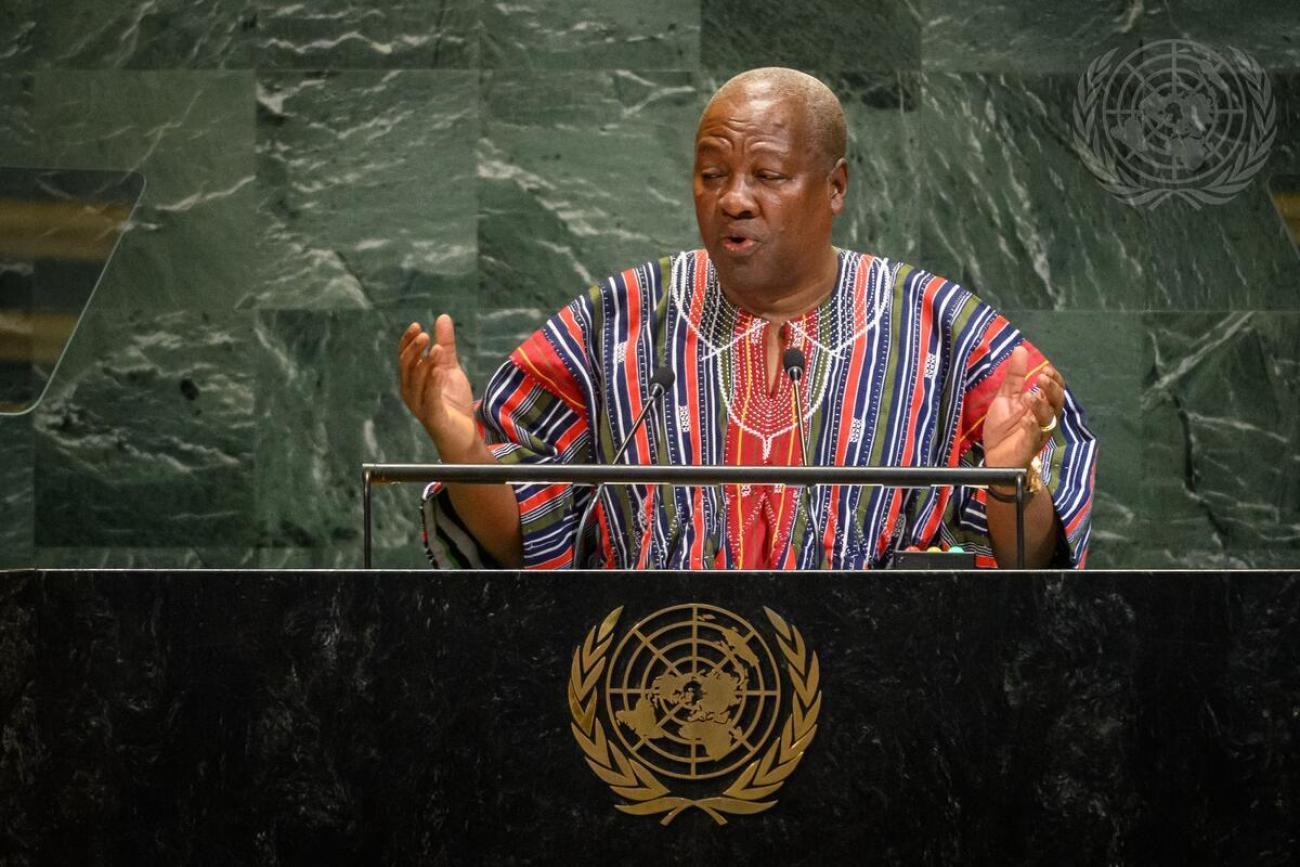
Western nations abstained at the UN as the EU cited legal concerns over retroactive slavery reparations. Meanwhile, speaking at a high-level dialogue at the University of the West Indies in Jamaica, President John Mahama declared that African involvement in the transatlantic slave trade does not diminish its criminality or weaken the case for reparations.
Addressing key historical criticisms, Mahama argued that local African participation does not absolve the European powers that funded, structured, and institutionalised the trade over centuries. He described the transatlantic slave trade as a state-sponsored, commercial system orchestrated by governments and major institutions.
To illustrate his point, Mahama drew a direct parallel to the Holocaust, noting that while some Jewish individuals were forced or coerced into assisting Nazi operations, those actions did not lessen the genocide or strip it of its status as a crime against humanity.
To build a stronger global case, Mahama urged leaders to examine the financial, legal, and commercial systems that sustained the slave trade for centuries. He also called on African nations to confront their historical past, take full ownership of their narratives, and tell the unvarnished truth about slavery.
Reflecting on his own education, President Mahama recalled that school history lessons focused heavily on glorifying European abolitionists while giving minimal attention to the scale, brutality, and enduring trauma of the trade itself.
“History books lionised everyone involved in the abolition movement,” Mahama stated. “Now, we can finally begin telling our children the truth.”
He welcomed the growing global dialogue on the history and legacy of slavery, emphasizing that a recent United Nations resolution on reparations has renewed international efforts to address the transatlantic slave trade and its lasting consequences.