























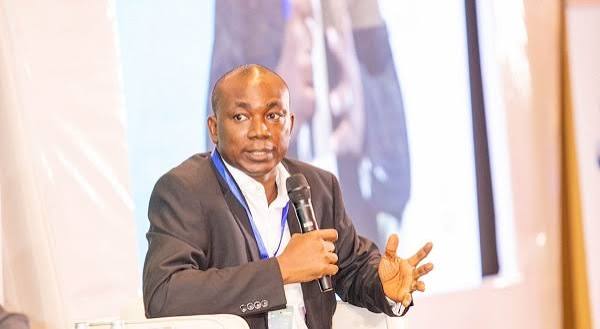
Economist Professor Godfred Bokpin has cautioned Ghana against becoming overly dependent on gold to sustain its recent economic gains, arguing that the country could be exposing itself to significant long-term risks.
Prof. Bokpin said Ghana’s focus on macroeconomic stability and increased foreign exchange earnings from gold was overshadowing the potentially severe environmental and social consequences of irresponsible mining.
He made the comments in an interview on Monday, August 24, during a discussion on Ghana’s economic outlook and the growing importance of gold to the country’s economy.
Prof. Bokpin questioned the sustainability of Ghana’s current economic gains, particularly given the country’s exposure to fluctuations in international gold prices.
He argued that a significant fall in global gold prices could quickly undermine some of the macroeconomic improvements being celebrated.
According to the economist, a decline of more than 40% in gold prices could severely weaken Ghana’s current economic position within a relatively short period.
He therefore questioned whether economic stability built largely on a commodity vulnerable to global price movements could be considered sustainable.
Prof. Bokpin warned that the gains could potentially be reversed within six to eight months following a major adverse price shock.
Beyond the risks associated with gold price volatility, Prof. Bokpin said Ghana must also consider the environmental damage associated with mining.
He argued that the economic benefits attributed to gold, including foreign exchange generation and improvements in macroeconomic indicators, should not be assessed without accounting for the damage caused to natural resources.
According to him, the national conversation around the economic contribution of gold has become so focused on macroeconomic stability that the dangers associated with irresponsible mining are receiving insufficient attention.
He described the destruction of water bodies and ecosystems as an existential threat that should not be treated as a secondary concern.
Call for environmental costs to be included
Prof. Bokpin advocated for a value-chain approach to assessing Ghana’s gold economy.
Under such an approach, the economic contribution of gold would be measured alongside the environmental and social costs incurred throughout the production process.
He said the country should account for what he described as the “environmental subsidy” associated with mining, particularly where environmental degradation is not fully reflected in the economic calculations.
The economist argued that damage to ecological systems should form part of the assessment of whether gold mining is genuinely making Ghana better off.
Prof. Bokpin questioned whether Ghana could claim to have achieved sustainable economic progress if improvements in foreign exchange reserves and other macroeconomic indicators were accompanied by significant environmental degradation.
He said the true measure of the gold sector’s contribution should therefore go beyond the amount of foreign exchange generated.
Instead, Ghana must consider the combined economic, social and environmental consequences of gold production.
His comments come amid growing attention to the role of gold in Ghana’s economic recovery and the activities of the Ghana Gold Board (GoldBod).
While gold has become increasingly important to Ghana’s foreign exchange position, concerns over illegal and environmentally damaging mining have also intensified, particularly because of the impact on rivers, forests and other ecosystems.
Prof. Bokpin’s warning highlights the tension between using gold to support short-term economic stability and ensuring that the country’s natural resources are protected for future generations.