


















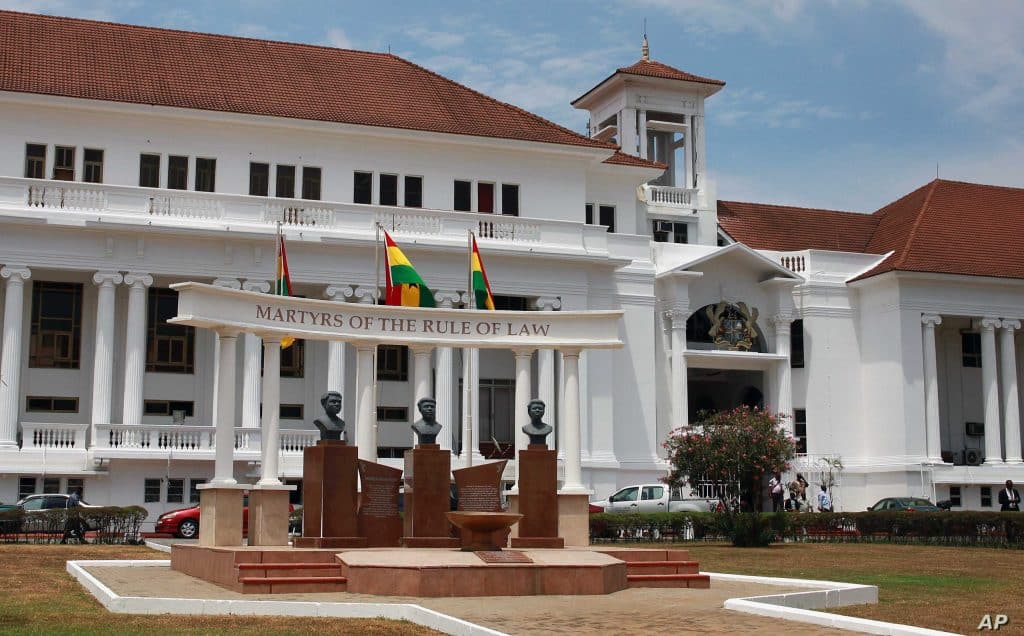
Ghana’s Supreme Court has delivered a landmark judgment that will fundamentally change how political parties choose their presidential and parliamentary candidates, declaring the long-standing delegate system unconstitutional.
In a 5–2 majority decision, the Court ruled that political parties can no longer restrict the selection of candidates to delegates. Instead, they must adopt an electoral system that allows all members in good standing to vote directly in internal presidential and parliamentary primaries.
The Court gave political parties one year to implement the necessary reforms and establish mechanisms that will enable eligible members to participate fully in the candidate selection process.
The judgment arose from a constitutional suit filed by Prof. Kwabena Frimpong-Boateng, Dr. Nyaho Nyaho-Tamakloe and Dr. Christine Amoako-Nuamah. The plaintiffs argued that delegate-based primaries disenfranchise ordinary party members and undermine the democratic principles guaranteed under Ghana’s 1992 Constitution.
In its ruling, the Supreme Court agreed with the plaintiffs, holding that the delegate system creates a narrow electoral process that is susceptible to money politics and limits broader participation within political parties.
According to the Court, allowing all members in good standing to vote in party primaries would strengthen constitutional democracy, promote greater political participation and enhance accountability in the selection of candidates.
The Court also ruled that the Electoral Commission has a constitutional responsibility to ensure that political parties organise and conduct their internal affairs in a manner that complies with the Constitution.
Having upheld the arguments advanced by the plaintiffs, the Court granted all the reliefs they sought.
As part of its orders, the Supreme Court restrained all political parties from continuing to use the delegate system to elect their presidential and parliamentary candidates. Parties are now required to replace the existing arrangement with a more inclusive voting system within one year of the judgment.
To avoid disrupting the country’s political and legal processes, the Court clarified that all decisions, appointments and actions lawfully taken under the delegate system before the ruling would remain valid. Those actions, it said, cannot be challenged solely because the delegate system has now been declared unconstitutional.
The case was heard by a seven-member panel comprising Chief Justice Paul Baffoe-Bonnie, Justice Gabriel Scott Pwamang, Justice Issifu Omoro Tanko Amadu, Justice Samuel Kwame Adibu-Asiedu, Justice Senyo Dzamefe, Justice Ernest Yao Gaewu and Justice George Kingsley Koomson.
The judgment was delivered by a 5–2 majority, with Justice Samuel Kwame Adibu-Asiedu and Justice Ernest Yao Gaewu dissenting.
The ruling is expected to have far-reaching implications for Ghana’s political landscape, requiring parties to amend their constitutions, electoral regulations and internal election procedures ahead of future presidential and parliamentary primaries. It could also significantly expand grassroots participation by giving ordinary party members a direct voice in choosing candidates for public office.