






















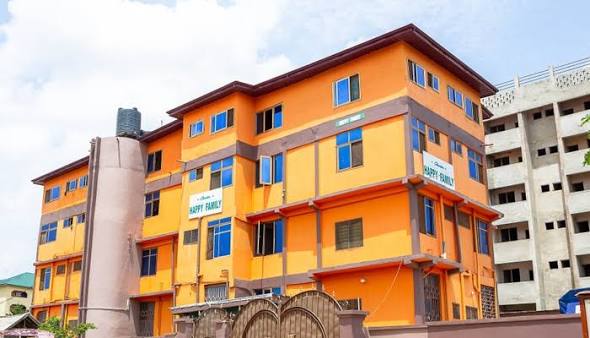
Private hostel operators around the Kwame Nkrumah University of Science and Technology (KNUST) have questioned the legal authority of the Rent Control Department to regulate fees charged for student accommodation.
The hostel owners argue that the existing rent laws were designed primarily for conventional residential arrangements and do not adequately cover modern, purpose-built student hostels.
Their position comes as the Rent Control Department intensifies efforts to scrutinise accommodation charges at private hostels located around public universities.
Hostel owners dispute Rent Control jurisdiction
The KNUST Hostel Owners Association of Ghana says purpose-built student accommodation operates under a different regulatory regime from traditional residential properties covered by the Rent Act, 1963 (Act 220) and the Rent Control Law, 1989 (PNDCL 138).
President of the association, Bishop Dr Akwasi Owusu-Bi, said hostel operators are not subject to the Rent Commissioner in the manner suggested by the ongoing enforcement exercise.
He maintained that the nature of student hostel operations differs from conventional landlord-tenant arrangements and that the government should first establish the legal basis for regulating hostel charges under the existing laws.
According to him, private hostel operators also operate within a licensing framework, which he said involves the Ghana Tourism Authority (GTA).
He warned that attempts to compel hostel owners to reduce their charges without considering the legal and operational framework governing the facilities could have unintended consequences.
“If we decide to close our hostels, how are the universities going to operate? We can do that because it is our private property,” he said.
Dispute follows concerns over high hostel fees
The Rent Control Department’s intervention follows growing concerns over the cost of student accommodation.
Students at the National Youth Conference reportedly raised concerns about what they consider excessive hostel fees, with some indicating that they pay between GH₵5,000 and GH₵10,000 per year for accommodation.
The concerns have increased pressure on authorities to examine how private hostels determine their charges, particularly in communities surrounding public universities where demand for accommodation remains high.
The Rent Control Department, under Acting Rent Commissioner Frederick Opoku, has subsequently stepped up its engagement and enforcement activities involving private hostel operators.
Owners warn of impact on private investment
While acknowledging the accommodation difficulties faced by students, hostel owners say efforts to control prices must be carefully considered to avoid discouraging investment in student housing.
They argue that private hostels have helped fill a significant gap in accommodation capacity at universities, where institutional facilities are often unable to meet demand.
According to the association, forcing operators to reduce their charges without taking into account operating costs, licensing requirements, maintenance expenses and investment risks could lead some owners to reconsider their participation in the sector.
The owners fear that a reduction in private hostel capacity could ultimately worsen the accommodation shortage and leave students with fewer options.
Lawyer calls for dialogue and legal clarity
Lawyer for the association, Michael Gyang Owusu, also challenged the jurisdiction of the Rent Control Department and called for dialogue between the regulator and hostel operators.
He argued that Ghana’s rent laws were developed decades ago, at a time when the concept of purpose-built student accommodation, as it exists today, was not envisaged.
“What is missing in all this is the dialogue,” he said, arguing that the legal framework should be examined against the realities of modern student accommodation.
Mr Owusu maintained that the government should clarify the applicable legal framework before taking enforcement measures against hostel operators.