

























The Centre for Policy Scrutiny (CPS) has thrown its support behind calls for Parliament to launch a bipartisan investigation into reported losses of more than US$1.7 billion, equivalent to about GH¢22 billion, linked to Ghana’s Domestic Gold Purchase Programme (DGPP).
The Centre for Policy Scrutiny says the conflicting explanations surrounding the figure make an independent and evidence-based parliamentary inquiry necessary to determine the true nature of the reported amount, how it was incurred and which institutions should be held accountable.
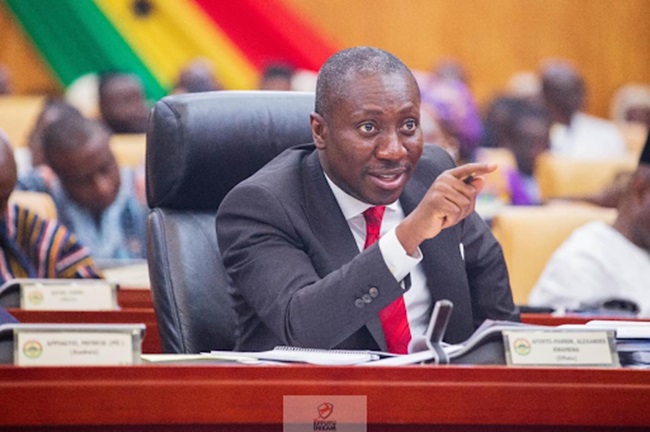
The CPS has therefore endorsed the Minority Caucus’s motion for a parliamentary investigation and backed Minority Leader Alexander Afenyo-Markin’s proposal for the establishment of an Ad Hoc Committee to examine the matter.
Dispute over the GH¢22bn figure
The proposed investigation comes amid a growing disagreement over whether the reported US$1.7 billion represents an actual financial loss to the state or should instead be regarded as a policy-related cost arising from the implementation of the DGPP.
The International Monetary Fund (IMF) reported that the scaling-up of the programme in 2025 resulted in losses exceeding US$1.7 billion, representing about 1.5 per cent of Ghana’s Gross Domestic Product (GDP).
However, GoldBod Chief Executive Officer Sammy Gyamfi has rejected the suggestion that GoldBod itself incurred the reported loss.
Mr Gyamfi has argued that the figure relates to losses recorded by the Bank of Ghana under the programme, rather than losses incurred by GoldBod. He has also pointed to GoldBod’s audited 2025 financial statements, which show that the institution recorded an operational surplus.
Mr Afenyo-Markin, on the other hand, maintains that the reported GH¢22 billion represents a financial loss to the Republic and must therefore be properly accounted for.
Speaker of Parliament Alban Bagbin has indicated that the House will admit the Minority’s motion, paving the way for parliamentary scrutiny of the competing claims.
CPS wants transactions and accounts examined
The CPS says Parliament’s investigation should not focus solely on the headline US$1.7 billion figure.
According to the think-tank, the proposed committee must examine the underlying transactions, financing arrangements and accounting treatment that produced the reported amount.
It wants the inquiry to establish precisely:
- The nature and source of the reported US$1.7 billion.
- The transactions and financial arrangements that generated the figure.
- The methodology and basis used to calculate the reported losses.
- The respective responsibilities of the Bank of Ghana and GoldBod.
- The financial exposure of each institution under the programme.
- How transactions under the DGPP were accounted for.
- Whether the programme has generated benefits that justify the resources committed to it.
The CPS believes documentary evidence should form the foundation of the inquiry, including audited financial statements, transaction records, contracts, pricing arrangements and other relevant financial documentation.
Gold purchase programme under scrutiny
The DGPP has significant implications for Ghana’s foreign exchange reserves and public finances, making the controversy particularly important, the CPS said.
The Centre wants Parliament to establish whether the programme has delivered sufficient economic benefits relative to its costs and financial exposure.
It also believes the investigation should help distinguish between an accounting or financial loss and a policy cost incurred in pursuit of broader economic objectives.
“The investigation should remain transparent, evidence-based and bipartisan,” the Centre stressed.
For the CPS, such an approach would help move the debate away from political accusations and competing narratives and towards verifiable facts.
CPS calls for DGPP redesign
Beyond investigating the reported losses, the think-tank has raised concerns about the structure of the Domestic Gold Purchase Programme itself.
The CPS described the existing arrangement as “too generous” and argued that its current design could make losses inevitable.
It is therefore calling for a review and redesign of the programme to reduce unnecessary costs while maximising its economic benefits.
The Centre also cautioned that the marginal benefits of the current arrangement may not remain positive indefinitely, suggesting that policymakers should reassess the programme as market conditions and Ghana’s economic circumstances change.








 has thrown its support behind calls for Parliament to launch an investigation into reported DGPP losses)