



















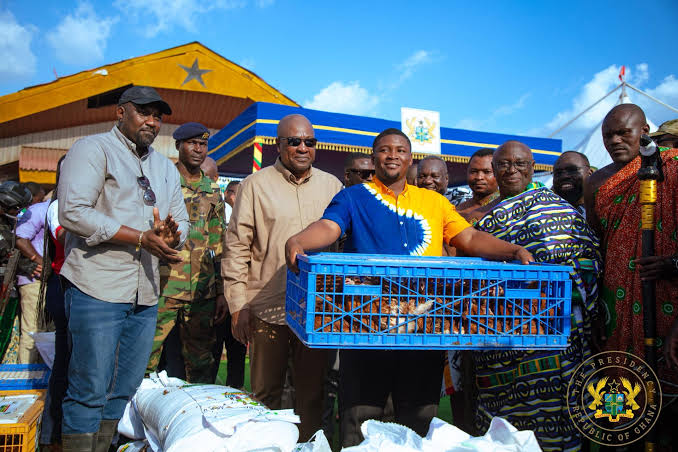
The Minister for Food and Agriculture, Eric Opoku, has urged participants in the government’s Nkoko Nkitinkiti initiative to treat the program as a commercial enterprise by selling most of the birds they rear rather than consuming them.
Speaking on the topic “The Future of Poultry Beyond Nkoko Nkitinkiti” on Friday, July 17, Eric Opoku noted that while participants may keep a few birds for family consumption, they should prioritize expanding their stock and selling the rest to generate income and contribute to the growth of Ghana’s poultry industry.
According to him, the primary objective of the Nkoko Nkitinkiti project is to increase local poultry production and strengthen the entire value chain. He explained that beyond increasing the bird population, the government is focused on promoting processing and value addition to ensure poultry products move efficiently from farms to consumers.
He identified access to reliable markets as one of the biggest challenges facing the poultry industry, stressing that value addition is essential to transforming the sector.
To address this challenge, the government has commenced the establishment of the Nkoko Nkitinkiti Poultry Processing Centre in Bechem, following the launch of the backyard poultry project.
The facility, the Minister said, is expected to provide a ready market for poultry farmers, support value addition, and enhance the competitiveness of Ghana’s poultry industry.
“You have been given the birds, and you are a human being, so you cannot leave them there and go to the market to buy chicken once you have them. So consume some, but don’t consume everything. See it as a business and as seed that can help you expand your poultry enterprise… In any case, what are birds raised for? Are they clocks to be fixed on the wall for people to look at?” he asked on Joy FM.
The Minister’s remarks align with the government’s broader efforts under the Nkoko Nkitinkiti initiative to boost domestic poultry production, promote the consumption of locally produced chicken, strengthen the poultry value chain, and reduce Ghana’s reliance on imported poultry products.