


















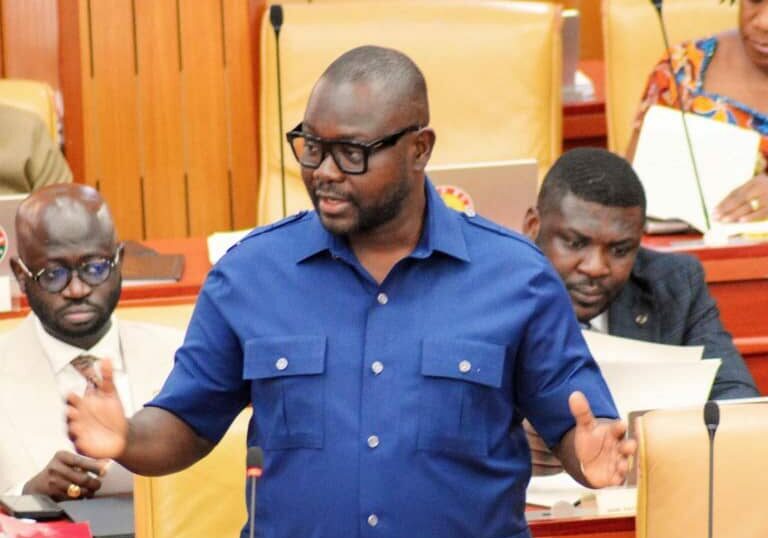
Former Minister for Works and Housing, Francis Asenso-Boakye, has called for continued investment in flood mitigation infrastructure, revealing that the previous Akufo-Addo administration allocated approximately GH₵450 million to flood control programmes over its eight years in office.
According to the Bantama Member of Parliament, the investment was part of broader efforts to address Ghana’s recurring flooding challenges through drainage expansion, flood management projects, and other interventions to reduce the vulnerability of communities, particularly in urban centres.
Speaking during a Capacity Building Workshop for Metropolitan, Municipal and District Chief Executives (MMDCEs) in Accra, Asenso-Boakye stressed that while infrastructure investment remains important, effective flood prevention also depends heavily on enforcing planning regulations and preventing unapproved developments in flood-prone areas.
Asenso-Boakye urged the current administration to sustain and expand ongoing flood control initiatives to protect lives, property, and critical infrastructure from the devastating effects of annual flooding.
“In the eight years of the Akufo-Addo Administration, the government committed GH₵450 million towards flood control programmes. I am urging this government to continue on that path because it is necessary,” he stated.
The former minister further argued that long-term solutions require stronger enforcement of land-use regulations and adherence to approved settlement planning schemes.
According to Asenso-Boakye, uncontrolled development, encroachment on waterways, and weak compliance with planning regulations continue to undermine efforts to address flooding in many parts of the country.
His remarks come amid renewed concerns about flooding in Accra and other urban areas, where heavy rainfall frequently causes property damage, displacement of residents, and disruptions to economic activity.
Meanwhile, Chairperson of Parliament’s Local Government and Rural Development Committee, Queenstar Pokuah Sawyerr, reaffirmed Parliament’s readiness to support efforts aimed at tackling the country’s persistent flooding challenges.
She indicated that the committee is closely monitoring how local assemblies are responding to flood-related risks and exploring ways Parliament can assist in developing stronger policy responses.
“The committee is particularly interested in understanding how assemblies within the region are responding to these challenges and how Parliament can support the development of policy interventions for flooded areas,” she said.
The comments highlight growing consensus among policymakers that addressing Ghana’s flooding crisis requires a combination of sustained infrastructure investment, stronger urban planning enforcement, and coordinated action between the central government, Parliament, and local authorities.
As climate variability and rapid urbanisation continue to increase pressure on cities, experts have repeatedly emphasised the need for long-term flood resilience strategies that go beyond emergency responses to focus on prevention and sustainable development.
By: Janice Opoku-Agyemang