




















The Ghana Investment Promotion Centre (GIPC) says Ghana is entering a new phase in the development of its mining industry, one that seeks to expand the role of indigenous companies while preserving the country’s reputation as a preferred destination for foreign investment.
The assurance comes amid growing debate over the future ownership of key mining assets, particularly the Tarkwa Mine operated by Gold Fields, whose mining lease is due to expire in 2027.
While discussions surrounding the lease renewal have reignited calls for greater Ghanaian ownership of strategic mineral resources, concerns have also emerged over the potential impact of such conversations on investor confidence.
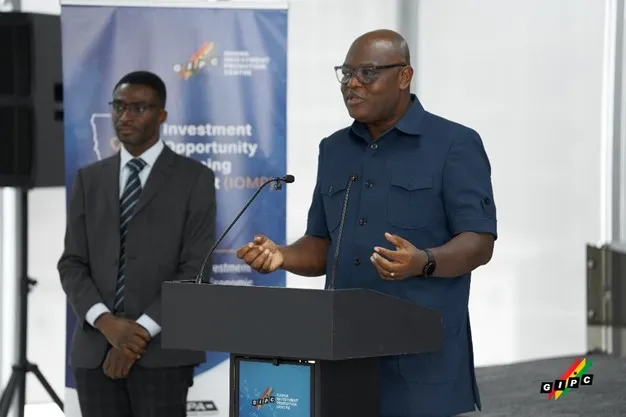
Addressing the issue during a media engagement, GIPC Chief Executive Officer Simon Madjie stressed that the government’s vision is not to replace foreign investors but to create opportunities for capable Ghanaian businesses to move beyond supporting roles and participate directly in mineral extraction.
According to him, Ghana’s mining industry has evolved significantly over more than a century, creating a pool of local companies with the technical expertise and operational experience required to take on larger responsibilities.
“Ghana has been mining gold for a very long time, maybe 120 years, 130 years. Throughout this period, we have seen the natural growth of Ghanaian businesses that have done well in the mining services sector. Some of them are contractors to major mining firms,” he explained.
Madjie argued that the growth of these local enterprises makes it timely to assess whether indigenous firms can successfully operate mining concessions and contribute more directly to the country’s mineral production.
He described the current moment as a significant milestone in Ghana’s economic development, noting that policymakers are exploring ways to increase local participation and retain more value from the country’s natural resources.
“We’ve only gotten to a point where we want to see if Ghana’s private sector can really also take up the mandate of mining to see what the prospects will be for us,” he said.
Despite the renewed emphasis on local ownership, the GIPC CEO reiterated that Ghana remains committed to attracting foreign direct investment and maintaining an investment-friendly environment.
“You would also agree with me that it doesn’t mean that the country is anti-foreign direct investment. We are pretty much pro-foreign direct investment into the mining sector,” he stressed.
His comments come at a time when governments across resource-rich countries are increasingly seeking ways to maximise domestic benefits from extractive industries while preserving the capital, technology and expertise that international investors bring.
For Ghana, the challenge remains balancing the desire for greater local participation with the need to maintain investor confidence and ensure continued growth in one of the country’s most important economic sectors.
Madjie maintained that any future policy direction would be aimed at complementing foreign investment rather than replacing it, emphasising that Ghana remains open to international mining companies and committed to fostering mutually beneficial partnerships.
“Ghana has always been a place where foreign businesses are welcome,” he said.
As discussions over mining lease renewals and ownership structures continue, the debate is expected to shape the future direction of Ghana’s mining industry and its broader strategy for managing natural resource wealth.
By: Janice Opoku-Agyemang