




















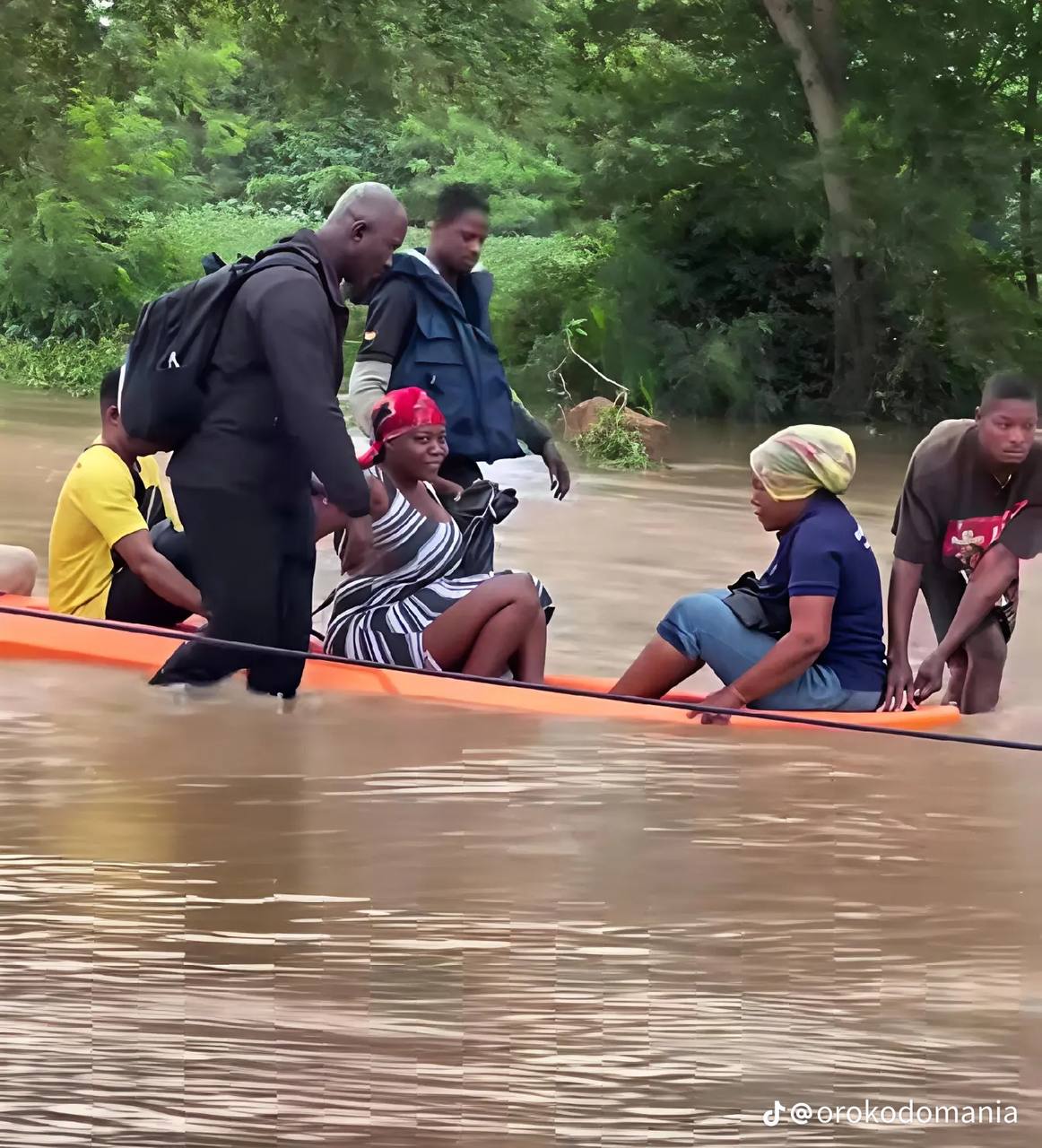
When torrential rains swept across Southern Ghana on Monday, 29th June 2026, Accra was exposed once again. Roads disappeared beneath muddy waters, electricity was disrupted in several communities, moving and stationary cars were submerged, houses were turned into waterways, and daily life ground to a halt.
But beyond the capital, another warning was unfolding. Sections of the Accra- Kumasi Highway were submerged, briefly cutting off Ghana’s two largest economic centres. Reports indicate that parts of the Central and Volta Regions also recorded serious cases of flooding. This raises an uncomfortable question: “ Could Kumasi be following the same path as Accra?”
Flooding has long been associated with Accra, but Kumasi is increasingly experiencing devastating floods of its own, from time to time. The difference is that while Accra’s floodwaters rise rapidly and linger, Kumasi’s often arrive slowly, like a lingering death, slow but possibly certain.
Why Accra and Kumasi Flood Differently
Accra’s geography makes it naturally vulnerable. Built on low-lying coastal plains, the city struggles to drain heavy rainfall quickly. When drains become blocked by plastic waste or wetlands are replaced with buildings, water has nowhere to go.

Kumasi, on the other hand, faces different challenges. Its hills allow water to move quickly, but that speed creates dangerous flash floods. Instead of pooling for days, water rushes downhill into rivers and valleys, overwhelming communities within hours.
Research suggests the problem is growing. Geographic Information System (GIS) flood mapping indicates that around 30% of Kumasi falls within high or very high flood-risk zones, while studies also show that the city lost more than 22 square kilometres of vegetation between 2013 and 2023 as urban development expanded. With fewer trees and more concrete, rainfall is increasingly becoming surface runoff rather than soaking into the ground.
Can Kumasi Avoid Accra’s Mistake?
The Kumasi Metropolitan Assembly (KMA) has stepped up efforts to reduce flood risks. In recent months, authorities have intensified desilting exercises, inspected flood-prone communities, organised community clean-up campaigns, and reintroduced sanitation enforcement teams to discourage indiscriminate dumping into drains. The Assembly has also moved to clear some structures obstructing waterways.
These measures are important, but experts say they are only part of the solution.
Increasingly, urban planners argue that flooding is not simply a rainfall problem—it is a planning problem. Natural wetlands that once absorbed stormwater have been built over, rivers have been narrowed by encroachment, and floodplains have steadily given way to concrete. While keeping drains clean is essential, many experts believe Ghana’s cities must also protect wetlands, restore river buffers, and invest in modern stormwater infrastructure if they are to withstand increasingly intense rainfall.
Hydrological studies suggest engineered detention basins alone could reduce peak stormwater flows by as much as 35%, highlighting the need for long-term infrastructure alongside routine sanitation efforts.
As climate change brings more intense rainfall and Ghana’s cities continue to grow, the question is no longer whether floods will happen—they will. The real question is whether cities like Accra and Kumasi will adapt before the next storm arrives.
Because when the rains come again, it won’t just be roads that are tested. It will be the choices made long before the first drop falls.
By: Fredrick Kofi Amponsah