








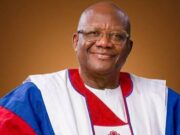





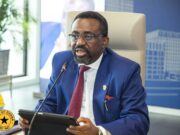





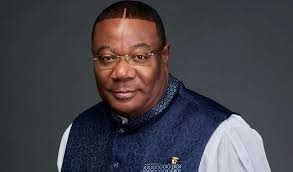
Archbishop Nicholas Duncan-Williams, presiding archbishop of Action Chapel International and one of Africa’s most prominent Christian leaders, delivered a stirring address on Wednesday, 3rd June 2026, at the 4th African Inter-Parliamentary Conference on Family, Sovereignty, and Values, calling on African nations to prioritize unity and long-term national vision as essential tools for development.
Speaking before delegates gathered for the continental conference, Archbishop Nicholas drew sharp contrasts between Africa’s leadership culture and that of global powerhouses, noting that countries such as India, China, South Korea, and Dubai have thrived largely because they operate on deliberate, century-long national visions. He challenged African nations to adopt a similar sense of purposeful direction. “Where there is no national vision, the people become victims of crisis.” Archbishop Nicholas said.
Central to his address was the theme of unity as a force multiplier. Archbishop Nicholas mentioned a passage from the Hebrew scriptures, which holds that one person can put a thousand enemies to flight, and two can put ten thousand, arguing that the principle was not merely about addition but divine multiplication. “God said if I find synergy, unity, and togetherness, instead of addition, I’ll give you multiplication,” he said, urging parliamentarians to move beyond fragmented approaches to governance and regional cooperation.
Archbishop Nicholas also cited former Ghanaian President John Agyekum Kufuor, who he said identified Africa’s core problem not as corruption but as a lack of love for the country. “You don’t take advantage and destroy what you love,” Archbishop Nicholas noted, adding that genuine patriotism, if cultivated across the continent, could unlock Africa’s full potential.
He closed his remarks with a quote he attributed to the late South African statesman Nelson Mandela: something only seems impossible until it is done.
The 4th African Inter-Parliamentary Conference on Family, Sovereignty, and Values brings together legislators and faith leaders from across the continent to deliberate on shared values and policy frameworks shaping African societies.