














President John Dramani Mahama has announced a tougher approach to tackling financial misconduct in the public sector, declaring that individuals implicated in Auditor-General’s reports will be required to refund misappropriated state funds or face imprisonment.
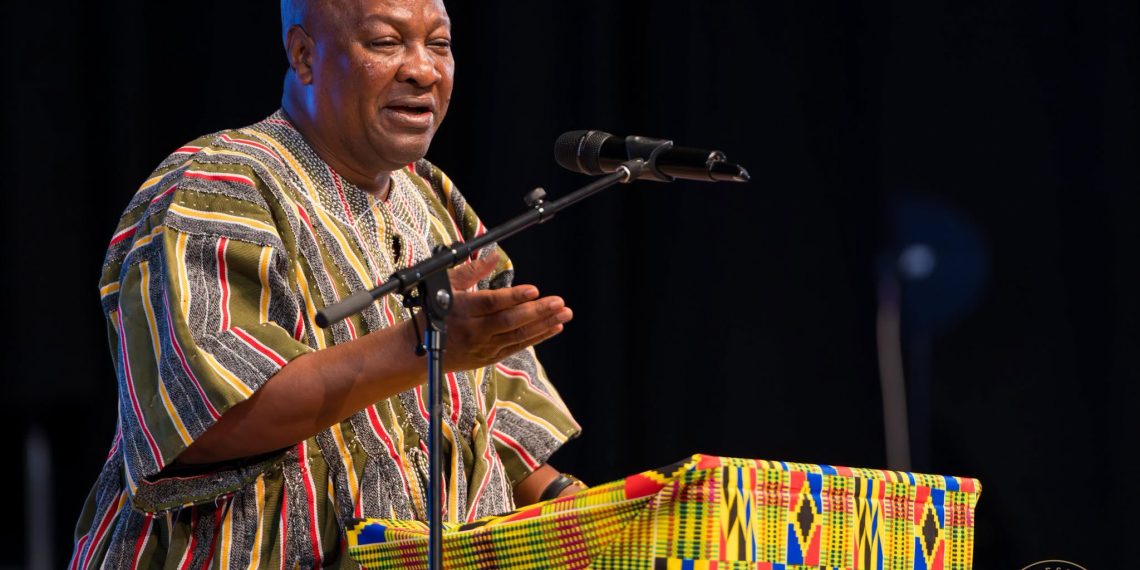
Speaking at a town hall meeting with members of the Ghanaian diaspora in the United Kingdom on Sunday, May 31, the President said the government is determined to strengthen accountability mechanisms and ensure that audit findings lead to concrete sanctions rather than ending with parliamentary scrutiny.
President Mahama expressed concern about the persistent financial irregularities highlighted in annual Auditor-General’s reports, noting that billions of cedis continue to be lost through misappropriation, weak financial controls and breaches of public financial management regulations.
According to him, the establishment of specialised audit courts provides an opportunity to hold public officials accountable and recover funds lost to the state.
“Every year, you hear the Auditor-General’s report. Ghana loses 12 billion cedis from misappropriations and other irregularities. The Chief Justice has graciously set up audit courts,” the President said.
He explained that public officials cited for financial infractions will no longer only be summoned before Parliament’s Public Accounts Committee (PAC), but could also face prosecution through the newly established courts.
President Mahama revealed that the Attorney-General and the Auditor-General will collaborate to identify individuals responsible for financial losses and initiate legal proceedings aimed at recovering public funds.
“The Attorney-General and the Auditor-General are going to take out all the people who have misappropriated, and we’re putting them in front of those special courts to either refund our money or proceed to Nsawam and go and catch some rest there,” he stated.
The President’s comments come amid renewed public debate over financial accountability following recent sittings of Parliament’s Public Accounts Committee, which examined several cases of irregular expenditure, procurement breaches and financial mismanagement across state institutions.
One of the cases involved officials of the Ho Municipal Assembly, who were directed by the committee to refund GH¢138,000 within 60 days after being cited for audit-related infractions.
The government’s latest stance signals a shift toward stricter enforcement of audit recommendations, with authorities seeking not only to expose financial wrongdoing but also to recover lost resources and impose legal consequences on offenders.
By: Janice Opoku-Agyemang