




















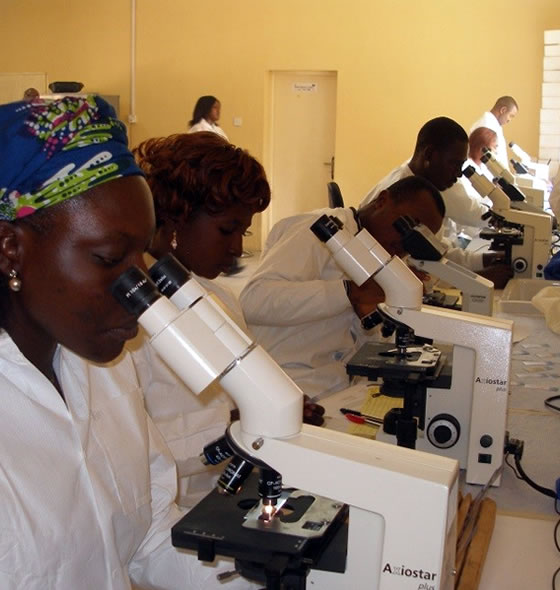
A growing dispute between doctors and medical laboratory scientists at the Korle-Bu Teaching Hospital is threatening to escalate into a major institutional standoff, with patients already feeling the effects of the ongoing tensions.
The disagreement, reportedly linked to the government’s proposed 24-hour economy policy and its possible implementation within hospital laboratories, has intensified friction between the two professional groups. At the center of the issue, however, is a struggle over management, operational control, and leadership of the hospital’s central laboratory.
The Medical Laboratory Professional Workers’ Union, known as MELPWU, has issued a seven-day strike ultimatum over what it describes as the unlawful reversal of an agreed leadership appointment at the facility.
The latest development further deepens the conflict within the Central Laboratory and comes after a brief strike action by doctors earlier this week.
In a notice dated May 5, 2026, and issued under the Labour Act, 2003 (Act 651), MELPWU informed the Office of the President, the Ministry of Health, and the National Labour Commission of its intention to embark on a nationwide strike beginning Tuesday, May 12, should its demands remain unresolved.
Speaking in an interview earlier today, Dr. Solomon Kwarshie, general secretary of the Ghana Medical Laboratory Scientists, maintained that medical laboratory science is an independently regulated profession, separate from medicine.
He further argued that the current disruptions are not being caused by the Medical Laboratory Science Association but rather by the Korle Bu Doctors Association and the hospital’s board.
He said, “The disruption is not coming from medical laboratory scientists but rather from the Korle Bu Doctors Association and the board of management to create chaos.”
According to him, there has been a lot of misinformation to create disaffection for the medical laboratory scientists. According to him, all that has been happening is to discredit them. He assured the public, however, that medical laboratory scientists in Ghana are competent and capable and willing to provide quality service to Ghanaians.