

























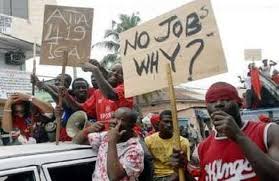
Ghana’s labour market continues to face significant pressure, with fresh data indicating that recent improvements in the broader economy have not yet translated into meaningful job creation.
According to the March 2026 Monetary Policy Report by the Bank of Ghana, advertised job vacancies—a key indicator of labour demand—declined by 4.9 per cent year-on-year to 3,244 in February 2026, compared to 3,411 recorded in the same month in 2025.
Although the drop appears modest, it underscores ongoing caution among businesses, many of which remain reluctant to expand their workforce despite easing inflation and improving macroeconomic conditions.
On a month-on-month basis, job vacancies also edged down by 1.0 percent from 3,276 in January 2026, signalling weak hiring momentum at the start of the year.
Cumulatively, total advertised vacancies for January and February 2026 reached 6,520, only slightly higher than the 6,465 recorded during the same period in 2025. This near-flat performance points to a labour market that is largely stagnant rather than growing.
The data highlights a key disconnect in Ghana’s economic recovery. While indicators such as inflation and exchange rate stability have shown signs of improvement, businesses appear focused on consolidation rather than expansion. Many firms are prioritising cost control, operational efficiency, and cautious growth strategies instead of increasing headcount.
As a result, unemployment risks are likely to persist in the near term, particularly for young people and new entrants into the labour market. Analysts suggest that stronger private sector expansion and targeted job creation policies will be necessary to stimulate hiring.
Overall, while Ghana’s macroeconomic environment is gradually stabilising, the labour market remains under strain—emphasising the ongoing challenge of translating economic recovery into broad-based and inclusive growth.
By: Janice Opoku-Agyemang


