


















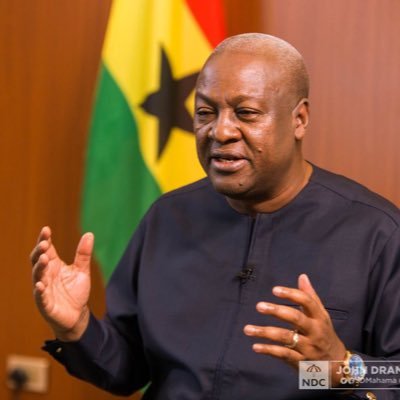
President John Dramani Mahama has called on Ghanaians to stop using drains as dumping sites, warning that indiscriminate waste disposal is one of the major factors worsening flooding across the country.
Speaking during an inspection of the Alajo drain on Friday as part of the National Clean-Up Exercise, the President said the devastating floods of June 29 should serve as a turning point for citizens to adopt more responsible sanitation practices and support efforts to reduce flood risks.
According to him, the Alajo drain—one of the major drainage channels in Accra—became heavily obstructed by a mixture of silt, plastics and household waste, significantly restricting the free flow of stormwater.
“We have to clear the drains. We just worked on this Alajo drain. It’s part of the Odaw stream. And there are two problems in it. There’s silt, and then there’s also plastics and household waste,” he said.
President John Dramani Mahama expressed concern about the variety of items recovered from drains during desilting exercises, describing them as evidence of widespread irresponsible waste disposal.
“You find in a drain like this, there are interlocking blocks. People discard interlocking blocks and throw them in the drain. Old furniture, dining tables—everything you can find in that drain,” he said.
He reminded the public that drains are designed solely to channel rainwater and should never be used as refuse dumps.
“The drains are not garbage bins. If you want to dispose of something, you know how to dispose of it,” the President stressed.
He encouraged residents to make use of designated waste disposal facilities, including skip containers provided by waste management authorities across the city.
“We have skip trucks that leave containers all over the city. Just go and throw your garbage into the skip, and the truck will come and pick it and take it where it has to take it,” he said.
President John Dramani Mahama also emphasised that addressing Ghana’s sanitation challenges requires a change in public attitudes. He noted that many communities once embraced communal clean-up activities but argued that rapid urbanisation has weakened the culture of collective responsibility for keeping neighbourhoods clean.
He further cautioned that clearing drains alone would not solve the flooding problem unless the waste and silt removed were properly transported and disposed of.
“Otherwise, if we don’t do that, what we would have done would be in vain, because when the rains come, they will just wash all the silt and garbage back into the drain,” he said.
The President’s remarks come as government intensifies flood mitigation efforts following the June 29 floods, which affected several communities, particularly in the Greater Accra Region. The floods claimed lives, displaced residents and caused extensive damage to homes, businesses and public infrastructure.
The National Clean-Up Exercise forms part of broader government measures to improve sanitation, desilt drains, restore waterways and reduce the impact of future flooding. Authorities have also renewed calls for stricter enforcement of sanitation regulations and greater public cooperation to keep drainage systems free of waste.