






















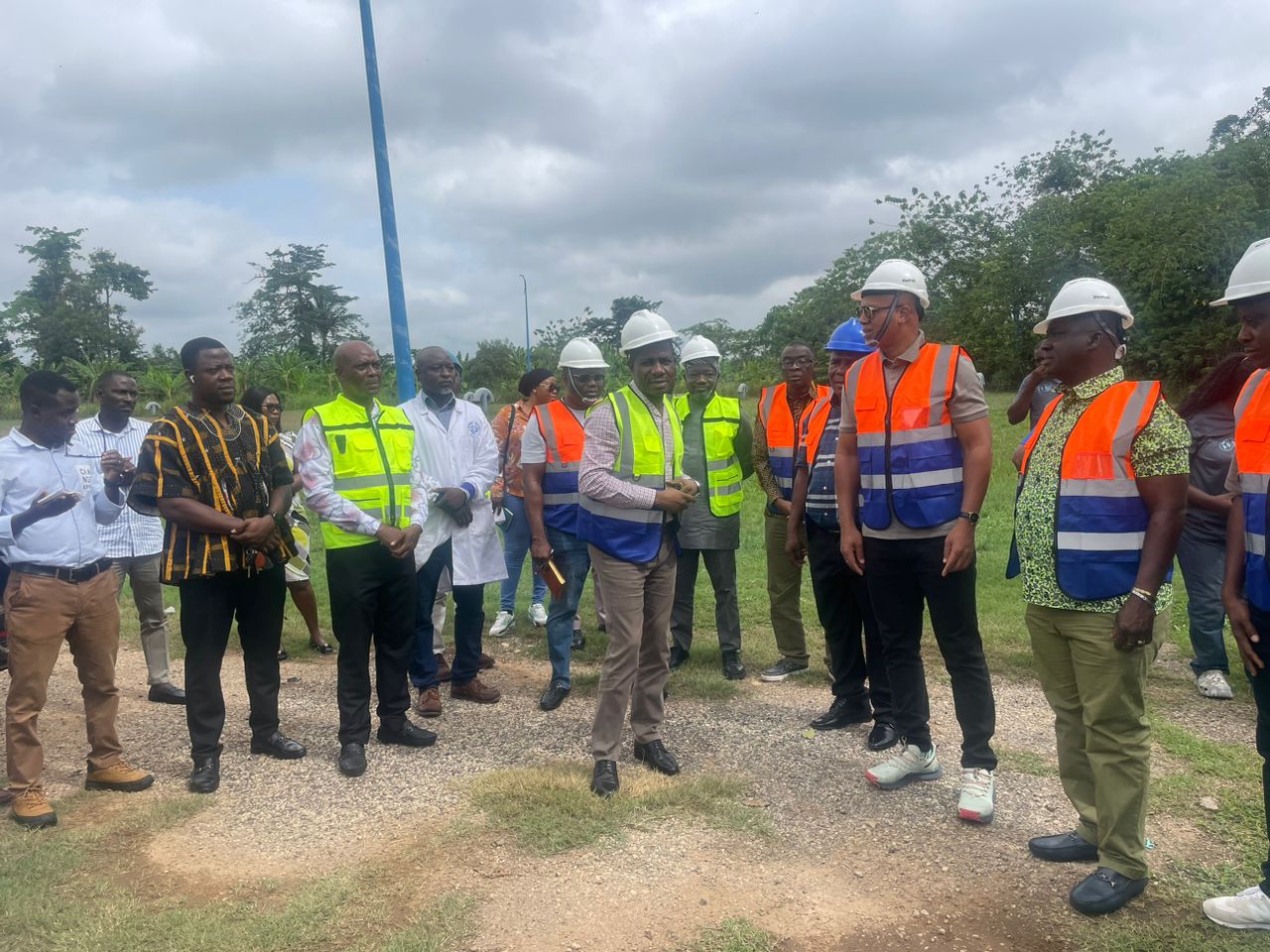
Hon. Adam Mutawakilu, the managing director of Ghana Water Limited, paid a visit to the Owabi and Barekese dams in the Ashanti Region on Thursday, April 9, 2026, to inspect the facilities and assess the challenges they face.
The managing director was welcomed by Dr Hanson Mensah-Akutteh, Regional Chief Manager of the Ashanti Production, who led the delegation on a tour of the Owabi and Barekese dams in the Region.
During the inspection of the Owabi dam, Dr Hanson Mensah-Akutteh pointed out that pollution from waste from the Owabi township and siltation were issues.
He revealed that the Owabi dam was originally designed to take 113,600 cubic meters of water per day, which is about 3 million gallons per day, but due to challenges of pollution and siltation, the dam is now producing 28 million gallons per day.
“You can see all the plastic containers that are coming from the town; they all merge here, and that is the nuisance we always have to battle with when we are doing our treatment. Last two years, the company had plans to dredge, and they did, but the silt load is still very voluminous, and I’m sure management will take a decision as soon as possible to evacuate the silt and increase storage capacity”, he stressed
On his part, Hon. Adam Mutawakilu, the managing director of Ghana Water Limited, explained that the purpose of the tour was to bring the central management closer to the regional facilities and to assess some of the challenges they faced in processing water.
“The management and I have prioritised visiting all the regions in 2026. This will bring top management closer to our staff, we’re able to listen to some of the challenges they have, and we are also able to communicate directly with them some of the policies and the reset agenda that President Mahama has promised. So far we have covered 11 regions with 4 more to go”, he said.
He acknowledged the challenges mentioned and pointed out that the management would work to resolve some of the issues to enhance the work of Ghana Water Limited in the Ashanti region.
By: Janice Opoku-Agyemang