






















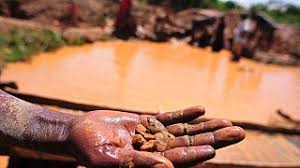
Illegal mining, popularly known in Ghana as galamsey, has long been associated with the destruction of forests, rivers, and farmlands. But according to the Parliamentary Select Committee on Energy, the menace is now dangerously extending into the heart of Ghana’s energy sector. The Committee has expressed deep concern about the growing threat illegal mining poses to heavy installations that support electricity generation, transmission, and distribution.
During an oversight visit to major power facilities, Deputy Ranking Member of the Committee, Collins Adomako-Mensah, revealed that key assets belonging to the Ghana Grid Company (GRIDCo) and the Bui Power Authority have recently come under direct attack. He explained that the reckless digging of illegal miners is undermining the foundations of power pylons, while pollution from their activities is worsening the quality of water in the Bui Dam reservoir, a critical national energy resource.
Illegal Mining and National Security
The Committee also drew attention to a worrying trend: illegal encroachment near the West African Gas Pipeline (WAPCO). This pipeline delivers natural gas from Nigeria to Ghana and is a vital energy supply line for the country. The encroachment, the Committee noted, represents a serious national security risk.
Adomako-Mensah emphasized the danger, saying, “At VRA’s gas plant in Tema, encroachers are building dangerously close to the WAPCO pipeline. Any compromise here could lead to disastrous consequences. It is a major national security concern that must be tackled urgently.”
Such developments, the Committee warned, threaten not only the stability of Ghana’s electricity supply but also the safety of communities living near these installations.
Oversight and Findings
The Parliamentary Select Committee on energy is tasked with examining challenges within the energy sector, investigating the performance of state institutions, and reviewing legislative proposals related to energy. On October 1, 2025, members visited the Anwomaso Thermal Power Station in Kumasi and other installations managed by GRIDCo, Bui Power, and the Northern Electricity Distribution Company (NEDCo).
The visits revealed a mix of progress and challenges. On the positive side, the Committee observed that Ghana’s power generation and distribution remain relatively stable. This achievement, members said, is due largely to the performance of institutions like the Volta River Authority (VRA) and GRIDCo.
Committee member and MP for Yilo Krobo, Albert Nyarkotey Tetteh, applauded VRA’s role in ensuring energy stability. He said, “VRA is doing very well. Power supply is stable across the country. If the lights go off today, I will not blame VRA. I will blame the devil. What we must do is support the energy sector, because VRA is our own.”
Despite commending the stability of Ghana’s power sector, the Committee stressed that illegal mining is fast emerging as one of the gravest threats to energy sustainability. Members called for decisive government action, stronger investments, and tougher enforcement of regulations to protect key energy installations.
The Committee’s recommendations include strengthening security at vulnerable sites such as power pylons, dams, and gas pipelines, while simultaneously intensifying the national campaign to clamp down on illegal mining operations. Without such measures, they warned, the progress made in the energy sector could quickly be undone.
Illegal mining is no longer only an environmental crisis—it has become a direct threat to Ghana’s energy sector and national security. From weakening the foundations of GRIDCo pylons to polluting the Bui Dam and endangering the WAPCO gas pipeline, the destructive activities of illegal miners are undermining vital infrastructure.
Although Ghana currently enjoys stable electricity supply, the Parliamentary Select Committee on Energy insists this stability cannot be guaranteed if illegal mining continues unchecked. Protecting the energy sector, they argue, is now both an economic necessity and a national security priority.