

















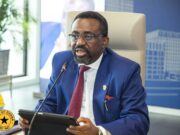





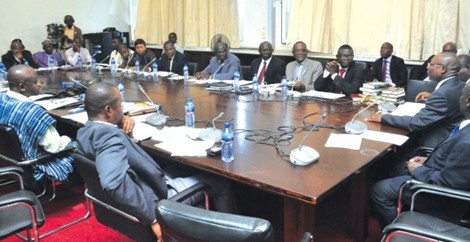
The Public Account Committee (PAC) of Ghana’s Parliament held a public hearing on Wednesday, October 1, 2025, reaffirming its role as a watchdog over the use of public funds. The committee, mandated by the 1992 Constitution and Parliament’s Standing Orders, remains one of the most powerful oversight institutions in the country. Its responsibility is to examine audited reports submitted by the Auditor-General and demand answers from government ministries, departments, agencies (MDAs), and assemblies on how taxpayers’ money is spent.
Role of the Public Account Committee
The public account committee exists to ensure financial accountability and transparency in government operations. By carefully reviewing audit findings, the committee identifies irregularities such as unaccounted expenditures, mismanagement of funds, and breaches of procurement procedures. It then interrogates the responsible officials, holding them accountable before Parliament and, by extension, the Ghanaian people.
These hearings are conducted openly, allowing the public and media to follow proceedings. This practice strengthens democracy by giving citizens confidence that the government is being held responsible for its use of the national purse.
At its October 2025 sitting, the Public Accounts Committee examined the Auditor-General’s recent reports covering MDAs and Metropolitan, Municipal, and District Assemblies (MMDAs). Among the issues under review were procurement irregularities, delayed payments, unretired imprests, and financial mismanagement.
Officials from several public institutions were invited to respond to questions, clarify discrepancies, and explain measures being taken to address lapses. The hearing brought together key stakeholders, including heads of institutions, auditors, civil society organizations, and the media.
Strengthening Fiscal Discipline
Through these hearings, the public account committee has become a cornerstone for promoting fiscal discipline. The October 2025 session followed this tradition, shining a light on weak financial practices and reinforcing the expectation that public funds must be managed prudently.
Over the years, PAC hearings have led to corrective actions, with recommendations that have saved the state millions of cedis. By making officials answerable in public, the committee deters misuse of funds and instills discipline in public financial management.
Transparency and Public Engagement
A defining feature of the public account committee process is its openness. Proceedings are public, ensuring accountability is not confined to Parliament but extends to the entire citizenry. Transparency remains key in building public trust, and the October hearing continued this commitment by exposing both the successes and failures of state institutions.
Civil society organizations have consistently praised the PAC for its openness but have also urged Parliament to enforce its recommendations more strictly. The October 2025 hearing echoed this call, with stakeholders emphasizing that recurring financial lapses must be addressed through stronger sanctions and systemic reforms.
While the final report of the October hearing will be submitted to Parliament in due course, early observations suggest a need for tighter compliance with the Public Financial Management Act, improvements in procurement processes, and enhanced training for financial officers across state institutions.
The public account committee is also expected to direct agencies to refund unaccounted-for amounts and recommend sanctions against officials where negligence or mismanagement is proven.
Contribution to Democratic Governance
The October 2025 sitting once again underscored the vital role of the Public Accounts Committee in Ghana’s democracy. By bridging the gap between audit findings and corrective actions, the committee safeguards the public purse, minimizes waste, and helps ensure that national resources are invested in development priorities.
Importantly, the committee not only highlights weaknesses but also recognizes institutions that comply with financial rules. This balanced approach reinforces accountability while promoting best practices across the public sector.
The public account committee hearing held on October 1, 2025, demonstrated Parliament’s continued commitment to transparency and financial discipline. By scrutinizing audit reports and interrogating officials, the committee upholds its constitutional duty to protect public funds.








 of Ghana’s Parliament held a public hearing on Wednesday, October 1, 2025, reaffirming its role...)