













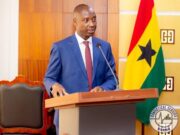





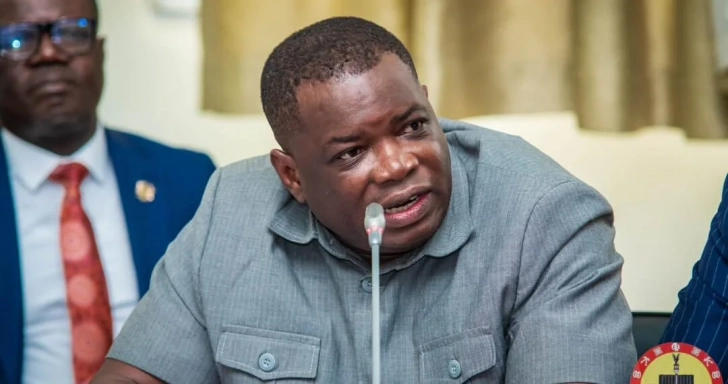
The Minister for Roads and Highways, Kwame Governs Agbodza, has detailed key infrastructure projects under the government’s big push program as part of efforts to accelerate road development and improve connectivity across the country.
Speaking on the floor of Parliament of Ghana on Tuesday during the 29th Sitting at the 1st Meeting of the 2nd Session of the 9th Parliament of the 4th Republic, the minister said the Big Push program will prioritize critical road projects that have stalled over the years.
According to him, the big push program builds on an earlier framework that identified 12 major economic corridors, widely referred to as the “12 Disciples,” aimed at transforming transportation and trade routes nationwide.
He explained that these projects were later expanded into 54 lots to promote competition among contractors and speed up execution under the big push program.
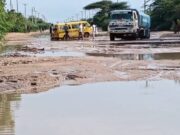
The minister further revealed that 23 road projects, valued at approximately $14.88 billion, which were awarded under the previous administration but abandoned due to funding challenges, have now been incorporated into the big push program.
Kwame Governs Agbodza noted that the inclusion of these projects under the Big Push program will ensure dedicated funding and timely completion.
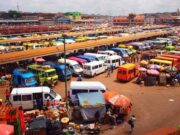
He listed several major projects set to be undertaken, including the design and construction of the Suame Interchange and ancillary works under Phase One, as well as the Suame Interchange local roads under Phase Two.
Other projects under the big push program include the rehabilitation and dualization of the Takoradi–Agona Junction road, the rehabilitation of the Tepa–Mabang–Gaoso road, and the reconstruction of the Jenejene–Sampa road.
The minister also mentioned the rehabilitation and upgrading of the Kasoa–Winneba road, the rehabilitation of the Ofankor–Nsawam road, the design, build, and dualization of the Adenta–Dodowa road, and the upgrading of the Nkwanta–Oti–Damango road.
He emphasized that the Big Push program is a strategic intervention by the government to address critical infrastructure deficits, boost economic activity, and improve transportation efficiency across regions.


