





















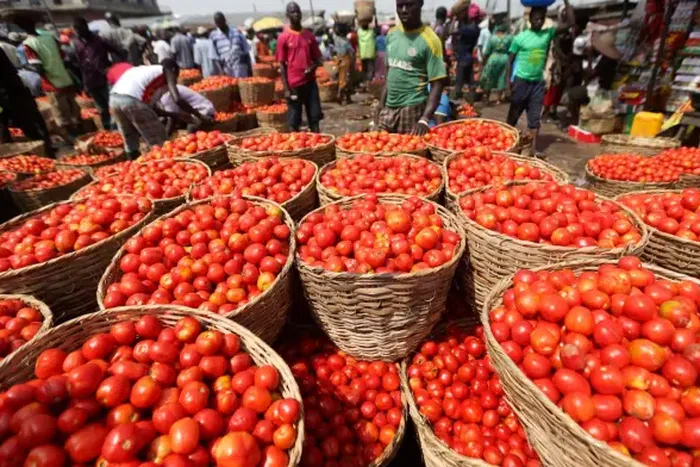
Peasant farmers in Ghana are raising alarm over a possible tomato shortage, urging the government to implement an immediate emergency response plan to prevent a supply crisis.
The Peasant Farmers Association of Ghana made the call following ongoing negotiations between Ghana and Burkina Faso over a temporary ban on tomato exports, a situation that could disrupt supply across the country.
Speaking at a World Bank Civil Society Organisation engagement on food security in Accra on Tuesday, March 24, President of the Association, Wepia Addo Awal Adugwala, warned that failure in the talks could result in sharp price hikes, supply gaps, and increased pressure on local producers.
According to him, peasant farmers are concerned that the country is not adequately prepared to handle the impact of a potential disruption in tomato imports.
“Within this period, the government should quickly set up an emergency strategic response plan with stakeholders to address the looming shortage of tomatoes, in case engagements with Burkina Faso prove futile,” he stated.
He explained that peasant farmers across the country require immediate support to scale up production and stabilize supply in the short term.
Mr. Adugwala outlined a multi-phase approach, urging the government to increase access to irrigated land, empower more peasant farmers, and strengthen market systems.
He also highlighted the need for improved storage facilities, including cold storage infrastructure, and better coordination between traders and transporters to ensure efficient distribution and reduce post-harvest losses.
On long-term solutions, peasant farmers are advocating for significant investment in irrigation infrastructure to support year-round farming.
Mr. Adugwala proposed the construction of at least one major irrigation dam in every region, noting that such investments would reduce Ghana’s dependence on imports.
He added that peasant farmers believe Ghana must increase its irrigable land from the current 10 percent to over 50 percent by 2028 to secure food production and prevent recurring shortages.
The concerns raised by peasant farmers highlight growing food security challenges as stakeholders continue to monitor the outcome of negotiations between Ghana and Burkina Faso.