



















Education in Ghana is undergoing sweeping reforms as the government rolls out fresh investments targeting access, infrastructure, skills training, and gender equity across the country.
Speaking during the State of the Nation Address, President John Dramani Mahama reaffirmed his administration’s commitment to removing barriers that prevent children, especially girls, from staying in school.
One of the key highlights under the education agenda is the continuation of the free sanitary pad initiative for schoolgirls. In 2025 alone, a total of 12.2 million packets of sanitary pads were distributed to girls in public schools nationwide.
For the 2026 financial year, the government has allocated 292.4 million Ghana cedis to sustain the program. The president said the initiative is designed to improve menstrual hygiene and reduce absenteeism among female students, ensuring that no girl’s education is interrupted due to menstrual challenges.
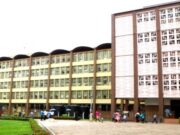
Beyond basic support interventions, the government is also addressing congestion in senior high schools. As part of efforts to ensure parity and expand access, 30 Category C secondary schools will be upgraded to Category B, while 10 Category B schools will be elevated to Category A status. Facilities in existing Category A schools will also be expanded to accommodate more students.
President Mahama further announced that six new regional TVET centers of excellence will be constructed across the country. These centers are expected to equip young people with practical, industry-relevant skills aligned with the demands of the evolving job market.
In addition, the government is reviewing the national curriculum to align with the Organisation for Economic Co-operation and Development Future of Education and Skills Framework. The review is aimed at making technical and vocational training more adaptive and resilient to global changes.
At the tertiary level, the government has entered international partnerships to establish two new public universities—one in the Bono East Region and another in the Oti Region. A grant from China has also been secured to establish a new public university in Damongo in the Savannah Region.
The President further announced plans to establish three new technical universities to strengthen skills development, enhance innovation, and support Ghana’s industrialization drive. Technical universities, he noted, play a critical role in closing the skills gap and reducing youth unemployment through industry-aligned, practice-oriented training.
As part of measures to improve teacher welfare under the broader education reforms, the government is rolling out the Teachers’ Housing Initiative, also known as “Teacher Dabre.” The program is a partnership involving District Assemblies, the GETFund, and other stakeholders, with the goal of building 50,000 housing units for teachers nationwide.
The initiative aims to improve living conditions for teachers, particularly in rural and remote areas, and boost retention while ensuring they can live and work with dignity.