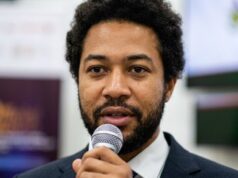

























Anti-corruption campaigner Vitus Azeem is raising concerns over the ongoing nationwide security recruitment.
The exercise covers the Police, Prisons, Fire Service, Immigration Service, and the Armed Forces.
He warns that high application fees and protocol allocations could undermine the entire process.
The Interior Ministry opened the recruitment portal from November 15 to December 15.
The Ministry says the online process will strengthen internal security and enhance public safety nationwide.
It also aims to attract disciplined, qualified, and patriotic citizens into the various security agencies.
Speaking earlier, Mr. Azeem questioned the process.
He criticised both the fairness and transparency of the recruitment, starting with the GH¢200 fee.
He argued that putting application forms online should not come with exorbitant charges.
“You wonder whether this is a tax on the unemployed. I’m coming to look for a job, and I have to pay Ghc200 just to fill the form when my chances of getting the job are very slim.
“In the past, it was 100 cedis, and some of us complained, but nothing happened. Parliament has been very quiet because it doesn’t affect them.
“These agencies already have websites. You simply upload the forms, and applicants complete them. If you are talking about 60,000 applicants paying 200 cedis each, that’s about 12 million cedis. Do you need that much just to run a portal?” he argued.
Beyond the fees, Mr. Azeem is even more worried about protocol recruitment practices.
He describes protocol allocations as a stain on the entire recruitment exercise.
He questions why politicians and influential persons receive large recruitment slots without clear criteria.
“They make it look open and transparent, but protocol allocation mars everything. Virtually everybody who matters in government has protocol slots. So, after people struggle to apply, those selected are not necessarily the best qualified. Protocol has become the only way to get a job in this country.
“If a parliamentarian gets two slots from the military, two from the prisons, two from the police, and two from immigration, how are those people chosen? Are they really the best candidates in the constituency? Is it fair? Is it honest?” he said.
Mr. Azeem is urging the security agencies to tighten their screening criteria significantly.
He says stricter, merit-based screening would stop unqualified applicants from slipping through the process.
He believes numbers at the body selection stage would fall with stronger initial screening.
Without reforms, he warns, public distrust will continue to plague security recruitment exercises.
He cautions that this distrust undermines efforts to attract the best candidates into key security roles.