






















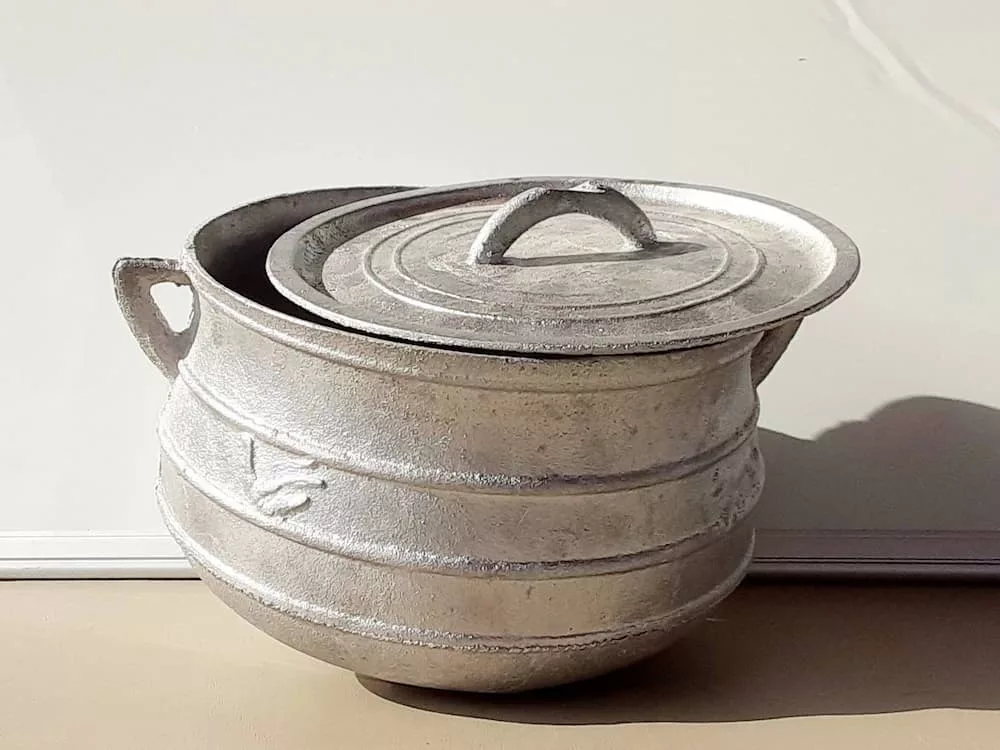
The Eastern Regional Manager of the Food and Drugs Authority (FDA), Anita Owusu-Kuffour, has called for an immediate ban on locally made cooking pots, popularly known as Dadesen. She said FDA investigations had found dangerous levels of lead in the pots, warning that the contamination poses a serious health threat to consumers.
Speaking at a stakeholder engagement on heavy metal contamination in cereal-legume mixes in Somanya, Madam Owusu-Kuffour explained that lead, a toxic metal, is often added during the manufacturing process to soften the metal and make moulding easier.
“When they are making the pots, the metal becomes hard, so they add lead to soften it. The sad part is that most local manufacturers have no idea about the health implications,” she said. “We are, therefore, advising the public to stop using Dadesen that contain lead.”
She cautioned that continuous use of lead-contaminated cookware could cause severe health problems, including cancer, kidney failure, and Parkinson’s disease. She urged local artisans to stop using lead completely and adopt safer materials, such as stainless steel, for cookware production.
Madam Owusu-Kuffour also warned against using nonstick cookware with worn-out coatings. She said once the coating begins to peel, it can release toxic chemicals and heavy metals into food.
“If the coating wears off, you expose yourself to serious health risks, including cancer,” she said.
She added that some kitchen utensils made with poor-quality materials can release harmful chemicals into food when scratched or corroded, which can enter the bloodstream and cause chronic illnesses.
“A good-quality stainless steel product ensures both safety and durability,” she advised.
The FDA Regional Manager stressed that food safety requires collaboration among producers, regulators, and consumers. “As science and technology improve, we must all move away from harmful practices to protect public health,” she said.