Listen to Orange FM Live
Home Blog

GIPC Backs Stronger Ghanaian Presence in Mining Amid Ownership Debate

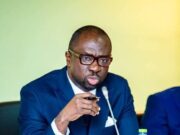
Chief Executive Officer of the GIPC, Simon Madjie

The Ghana Investment Promotion Centre (GIPC) says Ghana is entering a new phase in the development of its mining industry, one that seeks to expand the role of indigenous companies while preserving the country’s reputation as a preferred destination for foreign investment.

The assurance comes amid growing debate over the future ownership of key mining assets, particularly the Tarkwa Mine operated by Gold Fields, whose mining lease is due to expire in 2027.

While discussions surrounding the lease renewal have reignited calls for greater Ghanaian ownership of strategic mineral resources, concerns have also emerged over the potential impact of such conversations on investor confidence.

Addressing the issue during a media engagement, GIPC Chief Executive Officer Simon Madjie stressed that the government’s vision is not to replace foreign investors but to create opportunities for capable Ghanaian businesses to move beyond supporting roles and participate directly in mineral extraction.

According to him, Ghana’s mining industry has evolved significantly over more than a century, creating a pool of local companies with the technical expertise and operational experience required to take on larger responsibilities.

“Ghana has been mining gold for a very long time, maybe 120 years, 130 years. Throughout this period, we have seen the natural growth of Ghanaian businesses that have done well in the mining services sector. Some of them are contractors to major mining firms,” he explained.

Madjie argued that the growth of these local enterprises makes it timely to assess whether indigenous firms can successfully operate mining concessions and contribute more directly to the country’s mineral production.

He described the current moment as a significant milestone in Ghana’s economic development, noting that policymakers are exploring ways to increase local participation and retain more value from the country’s natural resources.

“We’ve only gotten to a point where we want to see if Ghana’s private sector can really also take up the mandate of mining to see what the prospects will be for us,” he said.

Despite the renewed emphasis on local ownership, the GIPC CEO reiterated that Ghana remains committed to attracting foreign direct investment and maintaining an investment-friendly environment.

“You would also agree with me that it doesn’t mean that the country is anti-foreign direct investment. We are pretty much pro-foreign direct investment into the mining sector,” he stressed.

His comments come at a time when governments across resource-rich countries are increasingly seeking ways to maximise domestic benefits from extractive industries while preserving the capital, technology and expertise that international investors bring.

For Ghana, the challenge remains balancing the desire for greater local participation with the need to maintain investor confidence and ensure continued growth in one of the country’s most important economic sectors.

Madjie maintained that any future policy direction would be aimed at complementing foreign investment rather than replacing it, emphasising that Ghana remains open to international mining companies and committed to fostering mutually beneficial partnerships.

“Ghana has always been a place where foreign businesses are welcome,” he said.

As discussions over mining lease renewals and ownership structures continue, the debate is expected to shape the future direction of Ghana’s mining industry and its broader strategy for managing natural resource wealth.

By: Janice Opoku-Agyemang

Avenor building collapse: 16 Unsafe Buildings Marked for Demolition in Accra

Avenor building collapse

The government has announced plans to demolish 16 structurally compromised buildings across the Greater Accra Region following the collapse of the Avenor building. A three-storey structure at Avenor in North Kaneshie claimed two lives and injured three others on Sunday.

Minister for the Interior, Mohammed Muntaka Mubarak, disclosed the development during a visit to the collapse site on Sunday, June 7, where emergency responders continued assessment and recovery efforts.

According to the Minister, the National Disaster Management Organisation (NADMO) has identified the buildings as unsafe and unfit for habitation after inspections conducted across the region. Authorities have begun evacuating occupants from the affected structures ahead of their planned demolition.

“Currently, NADMO has identified about 16 buildings within the Greater Accra Region that have to come down. We are going to ensure that, coming into the week, they will go and get all those buildings down,” Mr Muntaka stated.

He explained that the intervention is part of efforts to prevent avoidable disasters and protect residents from the growing threat posed by weakened, deteriorating structures.

“We are currently doing the evacuations, and they must bring all those buildings down. Some things are natural, and God will take care of the supernatural, but for the natural ones, we have to take care of them,” he added.

The announcement comes amid renewed concerns over building safety standards in urban communities, particularly in densely populated areas where ageing structures, poor maintenance practices, and non-compliance with building regulations continue to pose significant risks.

The Avenor building collapse has once again highlighted the need for stricter enforcement of construction standards, regular structural inspections, and stronger collaboration between regulatory agencies and property owners to ensure public safety.

Authorities say the planned demolitions are part of a broader strategy to reduce disaster risks and prevent future tragedies linked to unsafe buildings. Residents occupying structures identified as dangerous are expected to cooperate with evacuation directives as government agencies move to implement the exercise.

The latest measures signal a more proactive approach by authorities to address the threat of building collapses, which have periodically resulted in fatalities and property losses across the country.

By: Janice Opoku-Agyemang

True sovereignty is expensive but non-negotiable — Reverend minister on African cultural values

Rev Andy on cultural values

A reverend minister has declared that true sovereignty cannot be bargained away, insisting that African nations must defend their cultural values even at a significant cost, as he addressed the 4th Inter-Parliamentary Conference on Wednesday, June 3, 2026.

“True sovereignty is expensive, but it is non-negotiable,” the minister said, acknowledging that such a position could attract criticism, particularly around the perceived isolation of Africa from global human rights standards and modern diplomatic partnerships.

He pushed back firmly against that concern, arguing that genuine diplomacy is rooted in mutual respect rather than ideological coercion and that true independence comes at a cost.

Indigenous knowledge sidelined

At the heart of his address was a call to reclaim the intellectual weight embedded in African cultural values, specifically through the continent’s indigenous knowledge systems. He lamented that early Western anthropologists and missionaries had described African cultures using derogatory terms such as “heathen,” “barbaric,” “superstitious,” “animistic,” and fetish, language that discouraged the integration of indigenous knowledge into later educational programs and policies.

“The intellectual resources in African indigenous knowledge systems must be revisited to enrich African educational systems at all levels,” he urged.

A curriculum rooted in culture

The reverend minister called on ministries of education across the continent to deliberately weave indigenous knowledge, modesty, civic honor, and relational ethics into educational curricula. “We don’t fear the digital landscape. We want our young people to master it without losing their identity,” he said.

He described individual choices as fragile, warning that when they leave people isolated, the consequences are severe. His concern, he said, was protecting African youth from becoming what he called “alien Africans on African soil,” disconnected from the community structures that preserve human dignity.

Character over career

The minister urged africans to challenge educational systems across the continent, insisting they must go beyond career preparation. “Our educational systems must build values and character and not just careers,” he said.

Bagbin urges African parliaments to protect cultural identity and sovereignty

alban bagbin
Rt. Hon. Alban S. K. Bagbin

Speaker of Parliament Alban Bagbin has delivered a passionate closing address at the 4th African inter-parliamentary conference on family, sovereignty, and values, calling on African legislators to reject any notion that modernization demands the sacrifice of cultural identity.

The conference, held under the theme “Consolidating Parliamentary Consensus: Advancing the African Charter on Family Values and Sovereignty,” brought together Speakers of Parliament, Members of Parliament, policymakers, academics, civil society leaders, and development partners from across Africa and beyond.

Speaking at a critical moment for the continent, Alban Bagbin told delegates that the decisions made in African parliaments over the next few years would determine whether Africa enters the mid-21st century as a culturally distinct and self-determined global power, or as a fragmented continent that has compromised its soul for superficial economic validation.

“We can build advanced technological economies and participate at the highest levels of global finance while remaining profoundly African,” Bagbin declared. “We do not need to become a carbon copy of any civilization to be civilized.”

To drive home his point, Alban Bagbin drew on history, citing the Benin Empire as evidence that African civilizations were capable of sophisticated urban development — with organised streets, water systems, and beautiful cities — long before colonial forces dismantled them. He argued that Africa had done it before and could do it again.

Bagbin also pointed to China as a contemporary example of a nation that has built one of the world’s most powerful economies without abandoning its cultural identity — a model he challenged African nations to emulate.

The conference was convened at a time when African family systems, sovereignty, and cherished values are being challenged by evolving social, cultural, and technological developments. The four-day gathering focused on six key areas: protection of the African family system, preservation of African culture and heritage, the role of youth in balancing tradition and modernity, moral leadership, countering negative external influences, and fostering collaboration among African states on family-related issues. Graphic OnlineGhana MPS

In his concluding remarks, Alban Bagbin directed a pointed message to fellow legislators heading back to their home countries, urging them to translate the conference’s resolutions into concrete legislative action — including active bills, robust budgetary allocations, and rigorous parliamentary oversight — rather than allowing them to gather dust in secretariat archives.

“Go home and tell your people that their representatives have resolved to protect the sanctuaries of their homes, the heritage of their ancestors, and the sovereignty of their nations,” he said.

More than 30 countries confirmed participation in the conference, reflecting the growing importance of the platform in strengthening collaboration among African nations and reinforcing the role of legislatures in preserving societal values and promoting national sovereignty

Archbishop Nicholas Duncan-Williams calls for African unity at the 4th African inter-parliamentary conference…

Arch bishop Nicholas Duncan Williams

Archbishop Nicholas Duncan-Williams, presiding archbishop of Action Chapel International and one of Africa’s most prominent Christian leaders, delivered a stirring address on Wednesday, 3rd June 2026, at the 4th African Inter-Parliamentary Conference on Family, Sovereignty, and Values, calling on African nations to prioritize unity and long-term national vision as essential tools for development.

Speaking before delegates gathered for the continental conference, Archbishop Nicholas drew sharp contrasts between Africa’s leadership culture and that of global powerhouses, noting that countries such as India, China, South Korea, and Dubai have thrived largely because they operate on deliberate, century-long national visions. He challenged African nations to adopt a similar sense of purposeful direction. “Where there is no national vision, the people become victims of crisis.” Archbishop Nicholas said. 

Central to his address was the theme of unity as a force multiplier. Archbishop Nicholas mentioned a passage from the Hebrew scriptures, which holds that one person can put a thousand enemies to flight, and two can put ten thousand, arguing that the principle was not merely about addition but divine multiplication. “God said if I find synergy, unity, and togetherness, instead of addition, I’ll give you multiplication,” he said, urging parliamentarians to move beyond fragmented approaches to governance and regional cooperation.

Archbishop Nicholas also cited former Ghanaian President John Agyekum Kufuor, who he said identified Africa’s core problem not as corruption but as a lack of love for the country. “You don’t take advantage and destroy what you love,” Archbishop Nicholas noted, adding that genuine patriotism, if cultivated across the continent, could unlock Africa’s full potential.

He closed his remarks with a quote he attributed to the late South African statesman Nelson Mandela: something only seems impossible until it is done. 

The 4th African Inter-Parliamentary Conference on Family, Sovereignty, and Values brings together legislators and faith leaders from across the continent to deliberate on shared values and policy frameworks shaping African societies.

Kenya Protests: Two killed during demonstrations over proposed Ebola isolation centre

william ruto kenya president

Two people have reportedly been shot dead in the Kenyan town of Nanyuki during protests against plans by the United States to establish an Ebola isolation centre at a nearby military base.

According to reports, one of the victims was shot near the Laikipia Airbase, where demonstrators had gathered to protest the proposed facility. He later died after being transported to the hospital by friends. The second victim was reportedly brought to the same hospital by soldiers and was pronounced dead on arrival.

Authorities have not officially confirmed the deaths, and details surrounding the shootings remain unclear. The demonstrations were triggered by growing public concern over plans to establish a 50-bed Ebola treatment facility at the military base.

The center is expected to be staffed by American medical personnel and used to treat United States citizens affected by the ongoing Ebola outbreak in the Democratic Republic of Congo. On Monday, hundreds of protesters took to the streets of Nanyuki, blocking roads and burning tyres while police used tear gas to disperse the crowds.

The proposal has sparked widespread debate in Kenya despite the country not recording any Ebola cases. Last Friday, Kenya’s High Court ordered a halt to the opening of the facility after a rights group filed a case arguing that the project posed significant public health risks.

Speaking publicly on the issue for the first time, President William Ruto defended the arrangement, saying Kenya had deployed all necessary measures to protect the country from the virus. The president explained that the United States government had requested Kenya’s support in dealing with the outbreak and that the agreement was reached between long-standing partners.

“When President Donald Trump asked Kenya to support them by having a centre in Laikipia Airbase, I gave the okay because it was an agreement with friends who have walked with Kenya for 30 to 40 years,” he said.

President Ruto urged Kenyans not to politicise the matter, describing Ebola as a serious public health issue that requires responsible leadership and communication.

He insisted that the government of Kenya understands the risks involved and has taken the necessary precautions to safeguard the country.

The future of the proposed Ebola treatment facility now rests on the outcome of the ongoing court proceedings, as concerns over public health and national security continue to dominate discussions across Kenya.

All 13,500 Recruited Nurses Now Receiving Salaries – Akandoh

kwabena mintah akandoh
Kwabena Mintah Akandoh, Minister of Health

Minister for Health, Kwabena Mintah Akandoh, says all 13,500 nurses recently recruited into the public health sector are now receiving their salaries, with outstanding arrears expected to be fully paid by July. Speaking on JoyNews’ AM Show on Monday, June 2, the minister said addressing the delayed payment of newly recruited health workers became one of his top priorities upon assuming office.

According to Mr. Akandoh, thousands of nurses who had been recruited into the health sector were facing challenges accessing their salaries, a situation that generated widespread concern and protests.

He explained that the Ministry of Health engaged the Ministry of Finance to secure the necessary approvals and funding required to place the affected workers on the government payroll.

“When I assumed office, about 13,500 nurses had been recruited but were facing payment challenges. It was a difficult period, but through engagements with the Ministry of Finance, we were able to secure approval for their salaries,” he said.

The health minister also dismissed claims that the government intended to waive or withhold salary arrears owed to the workers.

He stressed that all employees who had rendered services were entitled to their earnings and assured the affected nurses that the outstanding arrears would be paid.

Mr. Akandoh disclosed that the government is targeting July to complete the payment of all arrears owed to the nurses. The minister further revealed that financial clearance has been granted for the recruitment of an additional 16,000 health workers this year. However, he noted that the initial phase of the exercise is expected to cover approximately 8,000 personnel.

The move forms part of the government’s efforts to strengthen the healthcare workforce and improve healthcare delivery across the country.

Mahama says Ghana-South Africa relations remain strong despite xenophobic attacks

mahama
President John Dramani Mahama

President John Mahama says diplomatic relations between Ghana and South Africa remain strong despite recent xenophobic attacks that have forced some Ghanaians to leave the country. The president made the remarks while speaking at Chatham House in London during his five-day official visit to the United Kingdom.

Responding to a question on relations between the two countries, President Mahama described the attacks as unfortunate and expressed concern about recurring violence targeting foreign African nationals in South Africa; however, he emphasized that Ghana does not have any breach in diplomatic relations with South Africa. 

According to President Mahama, xenophobic attacks have occurred in South Africa on several occasions over the years, often affecting citizens from neighboring countries, including Mozambique, Malawi, Zimbabwe, and Nigeria.

However, he noted that recent incidents have increasingly targeted Ghanaians living and working in the country.

The president said the government of Ghana took steps to evacuate some citizens after concerns mounted over their safety and the inability of authorities to quickly contain the attacks.

President Mahama suggested that some of the tensions could be linked to longstanding structural challenges dating back to the apartheid era, including unemployment among sections of South Africa’s Black population.

He called on African leaders and policymakers to work together to address the root causes of the violence and challenge the perception that migrants are responsible for economic hardships.

The president stressed that the attacks should not be allowed to damage the long-standing relationship between Ghana and South Africa.

President Mahama is currently in the United Kingdom, engaging policymakers, investors, and development partners on Ghana’s economic and development agenda.

Spare Parts Prices not the cause of fare increment- Abossey Okai Spare Parts Dealers

The Abossey Okai Spare Parts Dealers Association has rejected claims that rising spare parts costs are contributing to a proposed 20 per cent increase in transport fares, arguing that prices within the sector have remained largely stable in recent months.

The Association’s response comes after sections of commercial transport operators announced plans to increase fares from June 2, citing escalating operational expenses, including vehicle maintenance and spare parts costs.

Speaking in an interview in Accra, the Association’s Head of Communications, Takyi Addo, said assertions that spare parts prices have risen significantly are inaccurate and do not reflect current market conditions.

According to him, the relative stability of the Ghana cedi against major foreign currencies, particularly the US dollar, has helped importers and traders maintain stable pricing across the spare parts market.

“Spare parts prices have not been increased at all. There is 100 percent stability in the spare parts business. In fact, the stability of the cedi against the dollar has rather helped to keep prices stable,” he stated.

Mr Addo stressed that while transport operators may have concerns about their overall operational costs, spare parts prices should not be presented as a key justification for the planned fare adjustment.

“We disagree with the transport operators. They should not say they are increasing fares by 20 per cent because spare parts prices have gone up. That is simply not true. Traders are happy with the current trend in the market,” he said.

The Association noted that the improved performance of the local currency and reduced volatility in the foreign exchange market have eased pressure on businesses that rely heavily on imports, including spare parts dealers.

While acknowledging that traders continue to advocate for lower taxes and reduced business costs, Mr Addo maintained that current market conditions do not support claims of widespread price increases within the spare parts sector.

“If you ask me as the Head of Communications for the Association, there is no increment in spare parts prices. We have stability in the market and everything is okay now compared to previous periods,” he added.

The Abossey Okai Spare Parts Dealers Association has also called on transport operators to engage government and relevant stakeholders directly on concerns relating to fuel prices, taxes and other operational challenges instead of attributing planned fare increases to spare parts costs.

The disagreement highlights growing debate over the justification for the proposed fare adjustment, which has generated concern among commuters already grappling with the rising cost of living.

Transport operators have argued that increasing operational expenses continue to affect their businesses, while spare parts dealers insist that at least one of the reasons being cited for the planned fare hike does not reflect current realities in the market.

By: Janice Opoku-Agyemang

President Mahama Warns Audit Offenders to Refund Stolen Funds or Face Jail

President John Dramani Mahama

President John Dramani Mahama has announced a tougher approach to tackling financial misconduct in the public sector, declaring that individuals implicated in Auditor-General’s reports will be required to refund misappropriated state funds or face imprisonment.

Speaking at a town hall meeting with members of the Ghanaian diaspora in the United Kingdom on Sunday, May 31, the President said the government is determined to strengthen accountability mechanisms and ensure that audit findings lead to concrete sanctions rather than ending with parliamentary scrutiny.

President Mahama expressed concern about the persistent financial irregularities highlighted in annual Auditor-General’s reports, noting that billions of cedis continue to be lost through misappropriation, weak financial controls and breaches of public financial management regulations.

According to him, the establishment of specialised audit courts provides an opportunity to hold public officials accountable and recover funds lost to the state.

“Every year, you hear the Auditor-General’s report. Ghana loses 12 billion cedis from misappropriations and other irregularities. The Chief Justice has graciously set up audit courts,” the President said.

He explained that public officials cited for financial infractions will no longer only be summoned before Parliament’s Public Accounts Committee (PAC), but could also face prosecution through the newly established courts.

President Mahama revealed that the Attorney-General and the Auditor-General will collaborate to identify individuals responsible for financial losses and initiate legal proceedings aimed at recovering public funds.

“The Attorney-General and the Auditor-General are going to take out all the people who have misappropriated, and we’re putting them in front of those special courts to either refund our money or proceed to Nsawam and go and catch some rest there,” he stated.

The President’s comments come amid renewed public debate over financial accountability following recent sittings of Parliament’s Public Accounts Committee, which examined several cases of irregular expenditure, procurement breaches and financial mismanagement across state institutions.

One of the cases involved officials of the Ho Municipal Assembly, who were directed by the committee to refund GH¢138,000 within 60 days after being cited for audit-related infractions.

The government’s latest stance signals a shift toward stricter enforcement of audit recommendations, with authorities seeking not only to expose financial wrongdoing but also to recover lost resources and impose legal consequences on offenders.

By: Janice Opoku-Agyemang

Recent Posts